Monday, October 29, 2007

Computers for our children

I’ve been inundated by queries from people all over the country wanting to know more about the revolutionary US$100 laptop for children that is becoming a big hit in developing countries all over the world.

To these many people, and especially the wonderful (and forgotten) children of Papua New Guinea, contact details of the producer of this technological marvel are provided below as our government and relevant authorities seem to be working at a snail’s pace for our children to reap the benefits.

It comes at a time when Papua New Guinea is struggling to bridge the digital divide and make computers affordable and accessible to our children.

The "US$100 laptop," a product five years in the making, is right now taking off in a big way in developing countries of the world including neighbouring Solomon Islands.

The XO laptop, as it's officially called, is produced by the One Laptop Per Child (OLPC) Foundation, a nonprofit organisation founded by Nicholas Negroponte, who also founded the MIT Media Lab.

The OLPC says that the XO laptop offers children a sense of ownership and ensures that they're no longer dependent on a corrupt or inept government to provide educational opportunities.

The OLPC Foundation aims to provide these laptops to millions of children throughout the developing world in order to improve their education and their quality of life.

The XO laptop was designed to be lightweight, cheap and adaptable to the conditions of the developing world.

While a US$100 laptop is the goal, as of September 2007, the laptop costs about US$188.

Originally the OLPC Foundation said that governments must buy the laptop in batches of 25,000 to distribute to their citizens, but a new program will soon allow private citizens to purchase an XO.

Starting November 12, 2007, the Give 1 Get 1 (G1G1) program will allow U.S. residents to pay US$399 to buy two XO laptops - one for the purchaser and one for a child in need in a foreign country.

“Most of the nearly two–billion children in the developing world are inadequately educated, or receive no education at all,” the OLPC Foundation says on its website http://www.laptopfoundation.org/.

“One in three does not complete the fifth grade.

“The individual and societal consequences of this chronic global crisis are profound.

“Children are consigned to poverty and isolation—just like their parents—never knowing what the light of learning could mean in their lives.

“At the same time, their governments struggle to compete in a rapidly evolving, global information economy, hobbled by a vast and increasingly urban underclass that cannot support itself, much less contribute to the commonweal, because it lacks the tools to do so.

“It is time to rethink this equation.

“Given the resources that poor countries can reasonably allocate to education—sometimes less than $20 per year per pupil, compared to the approximately $7500 per pupil spent annually in the U.S.—even a doubled or redoubled national commitment to traditional education, augmented by external and private funding, would not get the job done.

“Moreover, experience strongly suggests that an incremental increase of ‘more of the same’—building schools, hiring teachers, buying books and equipment—is a laudable but insufficient response to the problem of bringing true learning possibilities to the vast numbers of children in the developing world.

“Standing still is a reliable recipe for going backward.

“Any nation's most precious natural resource is its children.

“We believe the emerging world must leverage this resource by tapping into the children's innate capacities to learn, share, and create on their own.

“Our answer to that challenge is the XO laptop, a children's machine designed for ‘learning learning’.

“XO embodies the theories of constructionism first developed by MIT Media Lab Professor Seymour Papert in the 1960s, and later elaborated upon by Alan Kay, complemented by the principles articulated by Nicholas Negroponte in his book, Being Digital.

“Extensively field-tested and validated among some of the poorest and most remote populations on earth, constructionism emphasises what Papert calls ‘learning learning’ as the fundamental educational experience.

“A computer uniquely fosters learning learning by allowing children to ‘think about thinking’, in ways that are otherwise impossible.

“Using the XO as both their window on the world, as well as a highly programmable tool for exploring it, children in emerging nations will be opened to both illimitable knowledge and to their own creative and problem-solving potential.

“OLPC is not, at heart, a technology program, nor is the XO a product in any conventional sense of the word.

“OLPC is a non-profit organisation providing a means to an end—an end that sees children in even the most remote regions of the globe being given the opportunity to tap into their own potential, to be exposed to a whole world of ideas, and to contribute to a more productive and saner world community.”

If you want to get in touch with OLPC, you can write to:
One Laptop per Child
P.O. Box 425087
Cambridge, MA 02142
U.S.A.

General information: http://www.blogger.com/information@laptop.org; Press inquiries: http://www.blogger.com/press@racepointgroup.com; Hardware, software, and technology issues:
technology@laptop.org; Information on specific countries: http://www.blogger.com/countries@laptop.org; Content inquiries: http://www.blogger.com/content@laptop.org; Volunteer opportunities:
volunteer@laptop.org; Donating to OLPC: http://www.blogger.com/giving@laptop.org; More ways to give:
givemany@laptop.org.

For comments and feedback, email malumnalu@yahoo.com or SMS 6849763.

Wednesday, October 17, 2007


Making computers affordable and accessible to our children

The National recently ran an exciting news story about “US$100 laptop” computers being made available to children in the neighbouring Solomon Islands.

It caught my attention, and that of many other Papua New Guineans, especially at a time when our country is struggling to bridge the digital divide and make computers affordable and accessible to our children.

The "US$100 laptop," a product five years in the making, is right now taking off in a big way in developing countries of the world including the Solomon Islands.

The XO laptop, as it's officially called, is produced by the One Laptop Per Child (OLPC) Foundation, a nonprofit organisation founded by Nicholas Negroponte, who also founded the MIT Media Lab.

Why give a child a laptop when he might need food, water, electricity or other basic amenities?

To that, the OLPC says that the XO laptop offers children a sense of ownership and ensures that they're no longer dependent on a corrupt or inept government to provide educational opportunities.

The computer is a powerful tool for learning and collaboration, exposing children to a wealth of knowledge and providing opportunities that they would not normally have.

It also replaces the need for textbooks, which are expensive, easily damaged and less interactive.

In many parts of the developing world, people live in large family groupings.

The XO laptop allows children, parents, grandparents and cousins to teach each other.

In some communities with limited electricity, children have used the laptop's bright screen as a light.

The OLPC Foundation aims to provide these laptops to millions of children throughout the developing world in order to improve their education and their quality of life.

The XO laptop was designed to be lightweight, cheap and adaptable to the conditions of the developing world.

While a US$100 laptop is the goal, as of September 2007, the laptop costs about US$188.

Originally the OLPC Foundation said that governments must buy the laptop in batches of 25,000 to distribute to their citizens, but a new program will soon allow private citizens to purchase an XO.

Starting November 12, 2007, the Give 1 Get 1 (G1G1) program will allow U.S. residents to pay US$399 to buy two XO laptops - one for the purchaser and one for a child in need in a foreign country.

The program's initial run will last two weeks.

To start, laptops purchased through this program will be given to children in Afghanistan, Haiti, Rwanda and Cambodia.

More laptops should be available for sale in the future, and more developing nations will be able to apply to join the G1G1 plan.

As of September 2007, about 7,000 laptops were being tested by children around the world.

Many governments have expressed interest in the laptop or verbally committed to buying it, but Negroponte said that some haven't followed through on their promises.

Still, enough computers were ordered - observers estimated more than three million - that full-scale production began in July 2007.

The XO laptop's design emphasises cheap, durable construction that can survive a variety of climates and the rigors of the developing world.

The machine can withstand dirt, scratches, impact and water while also providing long battery life.

Every feature is carefully engineered to conform to these standards and to minimise the need for maintenance.

To that end, the XO laptop has no moving parts - no hard drive with spinning platters, no cooling fans, no optical drive.

Unlike most commercially available laptops, the XO's display is readable in full sunlight.

Users can switch between color and black-and-white viewing modes to save energy.

The screen "swivels" around, making the computer into a tablet or e-book.

The 433 Mhz AMD processor and 256 megabytes of SDRAM are unimpressive by today's standards, but the XO has ample speed to run its lightweight, no-frills software.

The XO's processor is designed to be energy efficient, and several devices are available to recharge the battery, including an electrical adapter, hand crank, foot-pedal and solar-powered charger.

Rather than a traditional hard drive, the XO has a 1 gigabyte flash drive, similar to what's used in USB thumb drives, the iPod nano and digital camera memory.

Google will provide online storage services, and some communities or schools will have servers with large amounts of hard drive space.

The computer also has an SD memory slot to add more storage.

Like most new computers, the XO has an integrated WiFi card.

But it does have something most computers don't have.

The XO's green "rabbit ear" antennae boost the wireless card's range up to 1.2 miles.

The computer isn't dependent on a router being nearby either.

Instead, XO laptops can form a mesh network; any computers within WiFi range can connect to one another and share Internet access through a computer that's within range of a wireless connection.

The XO's durable, waterproof plastic shell has an integrated video camera, microphone, three USB ports and speakers.

Its keyboard can be adapted for different countries and alphabets.

The Red Hat software company supplies a version of the popular open-source Linux operating system.

Other software includes a Web browser (Mozilla Firefox), a word processor compatible with Microsoft Word, a PDF reader, a music program, games and a drawing program.

Certainly something for our authorities to consider for our children!

For comments and feedback, email the author at malumnalu@yahoo.com or SMS 6849763.

Wednesday, October 10, 2007

Become an instant radio star on the Internet

Are you one of the many young Papua New Guineans who has always dreamed of having his or her own radio show?

Are you a recording artist hoping to have your songs heard by the masses?

In the old days, you would have needed to know a lot of people in the right places - or have lots of money - to get heard.

But now, thanks to the Internet and its instantaneous connection to millions of people, your dreams can become reality.

You can also create video Podcasts - also called videocasts, vidcasts and vodcasts - which combine the audio component of Podcasting with visual media.

Just as Blogging has enabled almost anyone with a computer to become a bona fide reporter, Podcasting allows virtually anyone with a computer to become a radio disc jockey, talk show host or recording artist.

Although Podcasting first found popularity within the techie set in developed countries of the world, it has since caught on with the general public.

Log on to one of several Podcast sites on the Web, and you can download content ranging from music to philosophy to sports.

Podcasting combines the freedom of Blogging with digital audio technology to create an almost endless supply of content.

Some say this new technology is democratising the once corporate-run world of radio.

Podcasting is a free service that allows Internet users to pull audio files (typically MP3s) from a Podcasting Web site to listen to on their computers or personal digital audio players.

The term comes from a combination of the words iPod (a personal digital audio player made by Apple) and broadcasting.

Even though the term is derived from the iPod, you don't need an iPod to listen to a Podcast.

You can use virtually any portable media player or your computer.

Unlike Internet radio, users don't have to “tune in” to a particular broadcast.

Instead, they download the Podcast on demand or subscribe via an RSS (Really Simple Syndication) feed, which automatically downloads the Podcast to their computers.

The technology is similar to that used by TiVo, a personal video recorder that lets users set which programs they'd like to record and then automatically records those programs for later viewing.

Podcasting was developed in 2004 by former MTV video jockey Adam Curry and software developer Dave Winer.

Curry wrote a program, called iPodder, that enabled him to automatically download Internet radio broadcasts to his iPod.

Several developers improved upon his idea, and Podcasting was officially born.

Curry now hosts a show called The Daily Source Code, one of the most popular Podcasts on the Internet.

Right now, Podcasting is free from government regulation.

Podcasters don't need to buy a license to broadcast their programming, as radio stations do, and they don't need to conform to the US Federal Communication Commission's (FCC) broadcast decency regulations.

That means anything goes - from four-letter words to sexually explicit content.

Copyright law does apply to Podcasting, though.

Podcasters can copyright or license their work - Creative Commons is just one online resource for copyrights and licenses.

Although several corporations and big broadcast companies have ventured into the medium, many Podcasters are amateurs broadcasting from home studios.

Because Podcasters don't rely on ratings as radio broadcasters do, the subject matter of Podcasts can range from the refined to the silly to the excruciatingly mundane.

Podcasters typically cater to a niche group of listeners.

By Podcasting consistently on one subject, Podcasters not only assert their expertise on the subject matter but also draw a loyal and devoted group of listeners.

Podcasts are also used for informational and educational purposes -- self-guided walking tours, talk shows and training are all available through podcasting, according to Podcasting Tools.

Several companies are trying to turn Podcasting into a profitable business.

It is very easy to listen to a Podcast.

Once you master a few simple steps and search techniques, there are virtually no limits to what you can hear.

Recording a Podcast is almost as easy as listening to one.

Here's how the process works:

Plug a microphone into your computer ;
Install an audio recorder for Windows, Mac or Linux (free software for audio recorders includes Audacity, Record for All and Easy Recorder V5);
Create an audio file by making a recording (you can talk, sing or record music) and saving it to your computer;
Finally, upload the audio file to one of the Podcasting sites (FeedForAll has a tutorial on how to upload a file).

Some experts say Podcasting still has a long way to go before it catches on with the masses, but its growing popularity is undeniable.

It's possible that Podcasting will eventually become as popular as text blogging, which grew from a few thousand blogs in the late '90s to more than 7 million today.

Some Pod Casts are already providing thousand of downloads a day, and they're not just entertaining their listeners - they’re also doing business.

Back home, in a rare opportunity for local industry, business, students and for Papua New Guinea, the first-ever Datec Technology Expo today (Friday October 12) and tomorrow at the Crowne Plaza in Port Moresby will bring together everything technological to create PNG’s largest and most dynamic information and communication exhibition.

More than 35 international technology organisations will exhibit at the expo and many of those have taken up the offer to conduct seminars on their products and services.

See you there!

For comments and feedback, email the author at malumnalu@yahoo.com or SMS 6849763.

Tuesday, October 02, 2007


Making free phone calls over the Internet


Since Arthur Somare, Patrick Tammur and the National Alliance-led government seem to be so keen on maintaining the Information and Communications Technology (ICT) monopoly, Papua New Guineans should be looking at other options to cheaply make telephone calls and use the Internet.

One of these options, which will be discussed in this week’s column, is using the Internet to make cheaper telephone calls, thereby, bypassing Telikom and the expensive charges it has inflicted on us over the last 30 years.

Many Internet-savvy Papua New Guineans already make free long-distance computer-to-computer calls over the Internet using free software such as Skype.

In theory, Papua New Guinea should by now be on par with the rest of the world in ICT, however, the reality is we are still living in the “Stone Age” in the age of the Flintstones.

All over this increasingly-globalised world, a massive Information Revolution is taking place as economies use ICT as a passport to what economists call the “New Economy”.

I have said before, and will say it again, that the ICT monopoly in PNG, exorbitant telephone and Internet costs, as well as lack of knowledge about ICT and e-business all contribute to this digital divide.

Papua New Guinea will continue to remain light years behind the rest of the world if we do not jump on the ICT bandwagon in this globalised world.

Access to Internet, adequate infrastructure, human capacity building and appropriate policies on ICT are central issues in addressing the digital divide.

Success in this globalised world is predicated on ICT knowledge and successful knowledge-based economies will be based on the efficient and widespread use of ICT by all sectors within any given country.

If you've never heard of VoIP, get ready to change the way you think about long-distance phone calls.

VoIP, or Voice over Internet Protocol, is a method for taking analog audio signals, like the kind you hear when you talk on the phone, and turning them into digital data that can be transmitted over the Internet.

How is this useful? VoIP can turn a standard Internet connection into a way to place free phone calls.

The practical upshot of this is that by using some of the free VoIP software that is available to make Internet phone calls, you are bypassing Telikom (and its exorbitant charges) entirely.

VoIP is a revolutionary technology that has the potential to completely rework the world's phone systems.

VoIP is already in widespread use in many developed countries of the world including Singapore, where I called my wife’s cell phone in Port Moresby and had a long chat with her over the Internet, in August.

Today, VoIP technology is allowing small businesses to secure the features and functionality of a sophisticated phone system for a fraction of the cost by using the Internet to carry voice traffic just as it does data traffic.

Above all else, VoIP is basically a clever "reinvention of the wheel."

The potential of this emerging technology - which will more than likely one day replace the traditional phone system entirely – is limitless.

The interesting thing about VoIP is that there is not just one way to place a call.

There are three different "flavors" of VoIP service in common use today:

ATA - The simplest and most common way is through the use of a device called an ATA (analog telephone adaptor).

The ATA allows you to connect a standard phone to your computer or your Internet connection for use with VoIP.

The ATA is an analog-to-digital converter.

It takes the analog signal from your traditional phone and converts it into digital data for transmission over the Internet.

You simply crack the ATA out of the box, plug the cable from your phone that would normally go in the wall socket into the ATA, and you're ready to make VoIP calls.

Some ATAs may ship with additional software that is loaded onto the host computer to configure it; but in any case, it is a very straightforward setup.

IP Phones - These specialised phones look just like normal phones with a handset, cradle and buttons.

But instead of having the standard RJ-11 phone connectors, IP phones have an RJ-45 Ethernet connector.

IP phones connect directly to your router and have all the hardware and software necessary right onboard to handle the IP call.

Wi-Fi phones allow subscribing callers to make VoIP calls from any Wi-Fi hot spot.

Computer-to-computer - This is certainly the easiest way to use VoIP.

You don't even have to pay for long-distance calls.

There are several companies offering free or very low-cost software that you can use for this type of VoIP.

All you need is the software, a microphone, speakers, a sound card and an Internet connection; preferably a fast one like you would get through a cable or DSL modem.

Except for your normal monthly ISP fee, there is usually no charge for computer-to-computer calls, no matter the distance.

If you're interested in trying VoIP, then you should check out some of the free VoIP software available on the Internet.

You should be able to download and set it up in about three to five minutes.

Get a friend to download the software, too, and you can start tinkering with VoIP to get a feel for how it works.

For comments and feedback, email the author at malumnalu@yahoo.com or SMS 6849763.

How SMEs can benefit from e-marketplaces

Apart from having their own websites to sell their goods and services, Small and Medium Enterprises can also benefit from joining e-marketplace platforms.

The concept of e-marketplaces was quite foreign to me until I was introduced to it at an APEC e-commerce workshop in Taiwan last month.

An e-marketplace is an online space that brings together buyers and sellers to communicate, collaborate, and do business transactions.

You basically wander through the e-marketplace just like you wander through Koki or Gordons market, looking for goods and services, the difference being that you are in cyberspace on an e-marketplace.

The goal is to simplify the buying and selling process.

Usually, extra services are provided on an e-marketplace.

Overriding goals of joining include increasing revenue, and reducing costs.

China-based http://www.alibaba.com/ is a good example of a very-popular free e-marketplace which is primarily focused on SMEs.

You can buy and sell betel nuts on Alibaba.com, given that so many Asians chew betelnut just like us in Papua New Guinea.

Taiwan-based http://www.taiwantrade.com.tw/ is also a glowing example of an e-marketplace that readers of this column may want to visit.

Alibaba.com offers negotiation-based pricing, has won good reviews from around the world, and also offers premium/subscription services.

The current environment for e-marketplaces around the world is that they are still quite underused.

Common view is that adoption of a marketplace as a sales or purchase channel will change the way a company handles its sales and procurement.

It should bring productivity and sustained profitability to the bottom line.

Papua New Guineans should learn more about e-marketplaces to develop better-informed marketing strategies.

This also helps them to keep abreast of the changing business landscape.

So who owns e-marketplace platforms?

Sometimes, it’s an independent third-party, such as an industry association or government.

Sometimes, it’s an existing channel member.

Sometimes, it’s a co-operative of stakeholders with a vested interest.

Whoever it is, they are generally referred to as a “market maker”.

A typical e-marketplace will have over 100,000 members; therefore, the chance to increase business goes up.

E-marketplaces have basically three transaction models:
Aggregators;
Auctions; and
Exchanges.

Developments in Information Technology (IT) can be intimidating for SMEs, and e-marketplaces are a mystery for many.

But you often need only a minimal turnover to participate.

So why join an e-marketplace?

Large organisations expect suppliers to be available at these marketplaces.

They open up competition across geographic boundaries, creating greater competition.

More opportunities but potentially more competition in your own region.

Advantages of e-marketplaces include:
Access wider range of buyers/suppliers;
Faster purchase decisions;
Potential for partnerships;
Communication/administration flexibility;
24/7 convenience;
Access to information;
Improved customer service;
Dynamic updating of information;
Lower search and transaction costs;
Opportunity to differentiate from competitors in the same marketplace; and
Enter supply chain of larger firms.

Barriers of entry for SMEs include:
Lack of resources/knowledge;
Low IT skill level for many SMEs;
Lack of trust in the online world;
Lack of e-commerce readiness;
Lack of awareness of the benefits of e-marketplaces;
Lack of support from market makers;
Lack of industry/technological standards;
Understanding importance of integrating into larger supply chains;
Low web usage of buyers within an industry;
Short-term focus on benefits;
Difficulties in global trading (language/customs etc); and
Financial constraints (offering credit terms etc).

Both buyers and sellers have complained about crowding out of small local dealers, poor quality supplies, limited assistance by the e-marketplace in follow-up operations, insufficient specifications of technical features in bids; and unclear requirements for participation in auctions.

In sum, unrealistic short-term expectations are likely to lead to disappointment, effective planning of a participation strategy is important, and specific and realistic objectives should be set if an SME is to realise benefits.

I leave you with this letter from a good lady friend studying in Canberra, Australia: “Bro, good to know that you're doing all you can to publicise the IT world issue.

“I still stand on my point that leaders should be well educated...particularly on "Development Issues" in order for them to understand what you and I are talking about.

“I believe that it's their lack of knowledge about how essential it is (during this era) in terms of what goes on in the rest of the world that makes the rest of us suffer.

“I am learning a lot of good stuff about IT here at the University of Canberra but when I return to PNG, there is NO WAY...NO WAY I will be able to implement it effectively simply because the technology is not there.

“I dread the day I will return if you know what I mean.

“In terms of education, when my son was in Grade 1 at Goroka International School I was so amazed when he taught me how to use some programs that I had on my computer which I had no idea about.

“IEA (International Education Agency) introduces their students to the IT world as early as Early Childhood years, something that National Department of Education really needs to look into seriously.”

For comments and feedback, email the author at malumnalu@yahoo.com or SMS 6849763.

Sunday, September 30, 2007


The need for PNG to improve its ICT

Picture at left: Personal computers should be made available to underprivileged demographic groups in PNG
The overwhelming response to my two articles on Information and Communications Technology (ICT) in Papua New Guinea, from both within the country and abroad, shows the urgent need for the country to improve its ICT in this rapidly-globalised world.

I was overwhelmed by the responses to my articles in The National on Friday September 7 titled “Building your own website” and the one last Friday titled “Internet cafes and the digital divide”.

This week, I’d like to share with the readers of this column, some of the many responses to my articles over the last two weeks.

I was inundated by the constant stream of SMS text messages and emails from people, particularly small business men and women wanting to build their own websites, as well as those complaining about the very high Internet usage fees being charged in PNG.

A good friend of mine built his own website free of charge after reading my first article without having to pay exorbitant fees for a website designer, a domain name, or Internet Service Provider (ISP) rentals.

It was a dream come true for this friend of mine, who has been trying for years to have his own website, only to be met with the brick wall of high costs.

A handful of individuals and small business men and women are now in the process of building their own websites, while I am advising several others all over the country how to build their own, without being ripped of by unscrupulous companies and individuals.

Second-year Divine Word University IT student Julia Komoru commented: “We have completed a unit on website developing recently, and it’s not at all difficult to create a website.

“It’s really hard to understand why individuals and organisations charge so much for doing something so simple.”

Last Friday’s article on the very high Internet rates in this country, particularly those being charged by ISPs in Port Moresby at their cafes, brought back a swift and emotional response.

I particularly compared the high rates by charged by Data Nets and Datec to the low rates being charged at the RH Hypermart and the Sports Inn.

“I read with interest your article in the Weekender Section on ‘Internet cafes and the digital divide’,” wrote Data Nets general-manager Sundar Ramamurthy

“The piece that caught my eye was your basic comparison between our Cafe pricing (as an ISP) and those at the Sports Inn and RH.

“The question that is asked is ‘Why are our prices much higher than your favourite places i.e. Sports Inn and RH?

“Answer:

“1) Like any business the charging is market-driven. It could very
well be that RH and Sports Inn subsidise their Internet access so
people come in and have a drink or buy goods. This is often called a
‘loss leader’ that attracts customers to come to their shop to buy
other goods whilst they are on the Internet.

“2) One needs to compare the speed. Fifteen minutes at a more expensive
place might be equal to 30 minutes at a slower cafe. So price needs to be
compared to performance. In Internet terms this means speed and
throughput and value.

“In broad terms, there is broad concurrence that cost and reliability
(power and telecommunications) are critical to the future of PNG's
communications requirements.”

Datec general-manager Tony Westaway wrote: “I read with interest your article in the National on Friday 14 September 2007.

“You talked of a need to develop and expand the ICT industry and the country keeping in touch with world standards.

“You mentioned that students need to be educated on the potential of ICT.

“Datec is holding a Technology Expo over the 12th and 13th of October 2007 at the Crowne Plaza Hotel in Port Moresby.

“We will have a significant number of International exhibitors in attendance.

“It will provide an opportunity for business people, IT specialists, and most importantly students, to see the most recent developments in Information & Communication Technology.

“Datec has already distributed over 1000 free tickets to students in technical colleges, UPNG and TAFE, and other institutions in Port Moresby.

“By the way Datec is currently reviewing its charges for the Internet Café in Port Moresby.”

An anonymous reader wrote: “Internet access in PNG is much more expensive than you probably realise.

“For example Datec charges K100 for 80MB Wireless Internet access.

“In New Zealand KOL charges K100 for 10GB or 10,000MB Broadband Internet access.

“That is, PNG is 125 times more expensive! Further the speed is considerably slower!

“My understanding is that these ridulously high charges are because of the ridiculously high charges Telikom charges Datec and other ISPs.

“I can only afford very limited Internet access compared in PNG compared to what I used to be able to afford in New Zealand.”

Sam Roth wrote from Japan: “Thanks for keeping us informed on the development of ITC in PNG, especially with Internet.

“I have a good collection of your latest articles on IT and am quite pleased with your work.

“Keep up the good work and know that you have fans all over the world.

“In fact, it is an area of interest for me especially my Masters Thesis, and am amazed that I am not alone in this to make our beautiful country catch up with the rest of the world in ITC.”

Sam signed off with a quote from Einstein: "Among every impossibility lies an opportunity."

For comments and feedback, email the author at malumnalu@yahoo.com or SMS 6849763.

Internet cafes and the Digital Divide


Picture at left: Making the Internet affordable and accessible to the people...the Comserv Internet cafe at RH Hypermart
Being a regular user of Internet cafes in Port Moresby, it quite surprises me that cafes owned by Internet Service Providers (ISPs) charge among the highest rates.

For instance, Data Nets charges K5.50 for 15 minutes, K11 for 30 minutes, and K22 for an hour.

The country’s largest ISP provider, Datec, charges K10 for 15 minutes, K15 for 30 minutes, and K20 for an hour.

Rates charged by major hotels in Port Moresby vary but can be quite astronomical.

Compare these to the low K3 for 15 minutes, K6 for 30 minutes, and K12 for an hour being charged by the Comserv café at the RH Hypermart.

Closer behind is the café at the Sports Inn which charges K6 for 15 minutes, K9 for 30 minutes, and K12 for an hour.

I regularly haunt the RH Hypermart as it has arguably the best and cheapest Internet café in Port Moresby.

In theory, Internet cafes should be making the Internet affordable and accessible to the general public, however, they seem to be going the other direction in this country, making the Internet unaffordable and inaccessible.

High Internet costs are a major setback for Small and Medium Enterprises (SMEs) who don’t have Internet access, as they use these cafes to try and sell their products and services.

It is also a turnoff for tourists, students doing research, as well as members of the general public as they try to check their email as well as surf the Internet.

Talk about trying to create a knowledge-based economy!

I have heard many complaints from tourist friends about the very high Internet usage fees being charged in Papua New Guinea.

Perhaps Telikom and the ISPs in this country should look at countries like Singapore, who have very-efficient and cheap Internet services.

Anyone who’s passed through Singapore’s world-famous Changi Airport will tell you that you can access the Internet for free all around the terminal buildings.

The hotel I was staying at in Singapore last month offered free Internet services.

Strolling through the streets of Singapore’s Geylang district, I was able to use the Internet at one of the many such roadside cafes for about S$2 an hour.

I was also able to talk to my wife in Port Moresby over the Internet – Voice over Internet Protocol (VOIP) – for only S$1 a minute.

High Internet costs contribute towards making the much talked about Digital Divide in Papua New Guinea an enormous barrier to the ability of the people to participate in and benefit from the digital economy.

Measures of the Digital Divide include:
Affordability – Can underprivileged small businesses and individuals afford to use quality computers and Internet services?
Internet access – Are there wide band communication networks accessible to businesses and households both in urban and rural areas?
Personal computer penetration – Are personal computers economically owned by the underprivileged demographic groups?
Training – Are there training programmes of computer and Internet provided to underprivileged sectors of the population?
Relevant content – Are there relevant software packages, local language contents rich enough to address the needs of the underprivileged population?
IT sector – Are there efficient ICT industries who are able to serve the needs of local businesses and individuals?

On Wednesday last week, I attended a seminar organised by the PNG Computer Society, being someone who is very much interested in ICT.

Society secretary Sadiq Ali said as PNG gradually developed its economic and political sphere, there was an imperative need for the ICT industry to develop and expand in the country.

“PNG, although it is not apparent it is suffering from a need of advanced communication industry, the country needs to keep touch with world standards of information systems and networking,” he said.

“Costly as it may seem, the investment will do good to match the first-rated countries and furthermore, the future generation of this nation will be the ones to make use and improve on this.

“Coming from an educator’s angle in ICT, PNG needs to educate its younger generation on the potential of the ICT and the good it will do for the economy.

“Students need to be educated on the new technology and innovation so that they too become independent thinkers and networkers.

“The commercialisation of the ICT industry provides a good opportunity to develop and inspire the young.”

Meantime, I was overwhelmed by the response to my article in The National last Friday titled “Building your own website”.

I was inundated by the constant stream of SMS text messages and emails from people, particularly small business men and women, wanting to build their own websites.

They concurred that companies and individuals are benefiting from the ignorance of the little people by charging them huge amounts of money to build a website for their small businesses.

And after being ripped off, the little people then feel the brunt of paying excessive fees for a domain name, regular rental to the ISP, as well as Internet usage fees to Telikom.

The response to my article highlighted, at least to me, the need for training programmes of computer and Internet to be provided to all sectors of the community, particularly our SMEs.

For comments and feedback, email the author at malumnalu@yahoo.com or SMS 6849763.
Building your own website

Several companies and individuals in Papua New Guinea are profiteering from the ignorance of our little people by charging them huge amounts of money to build a website for their small businesses.

And after being ripped off by these companies, the little people then feel the brunt of paying excessive fees for a domain name, regular rental to the Internet Service Provider (ISP), as well as Internet usage fees to Telikom.

Caption for above: www.freewebs.com is one of the most popular free website building and hosting websites in the world.jpg

In a small economy such as that of PNG, small businesses cannot survive with such exorbitant costs.

This should no longer be the case, as it is quick and easy to design a website using templates freely available on the Internet, where you do not have to pay for a domain name or ISP rentals.

Your just have to pay for your Internet usage fee at the nearest Internet café if you don’t have Internet access in your office.

More often than not, these small PNG business men and women, are not Internet-savvy and will not know basics like uploading their website onto the Internet or registering their website with Internet search engines and web directories.

The situation for many Small and Medium Enterprises (SMEs) all over the world, including PNG, is that an entrepreneur owns a small or medium enterprise.

The company produces an interesting product such as organic coffee or arts and crafts, or provides a novel service such as taking tourists across the Kokoda Trail.

The problem: How do we use the Internet to sell the product or service?

The general methodology is to plan, analyse and enact E-marketing activities.

This methodology can be used by anyone who wants to use the Internet to access customers.

Components include:
Goals – What do we wish to achieve through E-marketing?
Resources – What resources can we expect to support our actions?
Actors – Who are the marketing actors in the E-marketing process?
Spaces – Where will our E-marketing take place online?
Actions – What specific E-marketing actions should we take?
Outcomes – What outcomes should we expect from our E-marketing activities?

Competing on the Internet is different because it is highly fragmented and holds more than 8 billion web pages.

The Internet features a “winner-take-all market” where a few winners get a lot of traffic while most sites get low traffic

A short-term goal may be stated in this way: “Our goal is to attract 100,000 visitors to the page in one week.”

A long term goal may be described in this way: “Our goal in the next one year is to get 3 million visits and 50,000 downloads of application forms for new accounts.”

Typical goals include:
Traffic to a website – How many hits, unique visitors?
Product purchase – How many visitors buy the product?
Brand excitement - How many visitors write about the product and tell others?
Repeat visits – How many visitors come back to buy more?

Existing resources should include the website and staff.

New resources to be considered include:
Do you have a marketing budget to attract more customers to your site?
Do you have a technology budget to build a better website and other digital services?

Actors’ orientation towards the company will be friendly, agnostic, or hostile.

The important decision is should you create your own website or go through a platform?

When you create your own website, it is hard to build awareness and traffic, and is a risky investment.

On the other hand, it is not a sure bet to go through a platform, and you must share revenue with the platform.

Making a free website these days is fast and really easy, which is certainly good news for SMEs all over PNG.

Government departments, statutory organisations, non-government organisations, sporting teams, provinces, villages, families, individuals, and many more should also be looking at seriously building their own website if they don’t already have one in this rapidly-globalising world.

Each of our 109 MPs should have their own website to share information with their voters and the people of PNG.

You can also create your own online Blog – which basically is an online diary - free of charge in which you can broadcast your views to the whole world.

I have my own Blog http://malumnalu.blogspot.com/ in which I feature some of the stories I have written about PNG and I have received response from around the world.

You can also send short video clips to YouTube, one of the most-popular and fastest-growing websites in the world, free of charge.

Many world leaders, including Australian Prime Minister John Howard, use YouTube to broadcast their video clips.

All over this increasingly-globalised world, a massive Information Revolution is taking place as economies use Information and Communication Technology (ICT) as a passport to what economists call the “New Economy”.

I have said before, and will say it again, that the ICT monopoly in PNG, exorbitant telephone and Internet costs, as well as lack of knowledge about ICT and E-business all contribute to this digital divide.

Papua New Guinea will continue to remain light years behind the rest of the world if we do not jump on the ICT bandwagon in this globalised world.

The digital divide within PNG is an enormous barrier to the ability of the people to participate in and benefit from the digital economy.

Access to Internet, adequate infrastructure, human capacity building and appropriate policies on ICT are central issues in addressing the digital divide.

Success in this globalised world is predicated on ICT knowledge and successful knowledge-based economies will be based on the efficient and widespread use of ICT by all sectors within any given country.

Small and medium enterprises, the backbone of the PNG economy, must be prepared with ICT knowledge.

If they are not ICT-savvy, they will not receive the benefits of globalisation and they will be left behind the rest of the world.

For comments and thoughts, or assistance with building your website, contact the author on email malumnalu@yahoo.com or SMS 6849763

Thursday, August 23, 2007


Thunderstorm


There was a big thunderstorm in Taipei yesterday afternoon during the third day of our APEC OVOP Workshop on E-Commerce.
At left is a picture of the Taipei 101, the tallest building in the world, being hit by lightnight.


There was loud thunder, lightnight flashes, and heavy rain.


This followed on from last Saturday's typhoon which lashed Taiwan.


Fortunately, the thunderstorm ended and the sun came out to shine.


Douglas Keari and I visited an electronics shop in Taipei before returning to the Grand Hotel to rest.


Wednesday, August 22, 2007


Death of the Macdhui


A small, but significant, anniversary took place on Monday June 18, 2007.


That was the 65th anniversary of the sinking of the motor vessel Macdhui, sunk in the Port Moresby harbour by Japanese bombs in June 1942.


One of the best-known landmarks in Port Moresby is the wreck of the Macdhui in the waters just off the Port Moresby Technical College at Kanudi.


Many people just drive or walk past without knowing the significant role that the Macdhui played in the development of Papua New Guinea.


Recently, I was asked to be a tour guide for a retired US veteran of the Korean and Vietnam wars, and one of the World War 11 relics I showed him was the wreck of the Macdhui.


As we stood at Kanudi looking out to sea, I wondered what stories the deep blue sea, the rolling hills, and the wide sky could tell me about what they saw that fateful day in 1942.


It was then that I realised that June 18, 2007, would be the 65th anniversary of the sinking of the Macdhui and decided to put pen to paper.


The Macdhui, 4630 tonnes, built in Glasgow, Scotland, in 1930, was owned and operated on the Australia-Papua New Guinea service by Burns Philp and Company Limited.


Macdhui’s maiden voyage took place in March 1931, sailing to Suva, Fiji, via the Azores, Jamaica, and the Panama Canal, with a load of coal.


Then the Sydney to Rabaul route for Burns Philip with 167 first-class passengers’ accomodation.
On June 20, 1931, a fire broke out on another voyage between Madang and Lae, but the passengers were safely taken ashore in lifeboats.


MacDhui was safely towed to Salamaua, New Guinea's then administrative capital, by Neptuna, another Burns Philp & Co vessel.


After patching at Salamaua, MacDhui was sailed to Sydney for six weeks of repairs.


With the onset of war the ship was commandeered by the Navy and used to evacuate civilians from New Guinea, then carrying Australian troops back to Port Moresby.


On June 17, 1942, the Macdhui was attacked by Japanese bombers as it was discharging to lighters in Port Moresby harbour.


It began zigzagging around the harbour but took one direct hit which caused considerable damage.


The vessel later went alongside the main wharf to unload dead and wounded.


The next day, at 10.45am, there was another air-raid warning and the Macdhui moved out into the harbour and began manoeuvring.


Soon after the raid began, it took a direct hit.


The captain headed towards shallow water where his ship finally keeled over onto a reef.


Ten of the crew of 77 were killed along with five Australian gunners from 39 Battalion.


Altogether, the Macdhui took four direct hits.


The dramatic sinking was captured on a black and white movie film shot by the famous Australian cameraman, Damien Parer from a nearby hilltop.


The loss of the Macdhui was a great blow to the morale of the Australian troops in Port Moresby.


Until then it had been the only regular and reliable link between Australia and Port Moresby.


After the war, the Australian government compensated Burns Philp for its loss.


The wreck itself is now deeply pitted and corroded under the waterline.


It is gradually breaking up but even if it does slip completely under the surface part of the Macdhui will remain in Port Moresby.


In the late 1960s the mast was removed and now stands outside the Royal Papua Yacht Club as a memorial to those who died.


One of the bells was erected in the tower of St John’s Anglican Church in Port Moresby and to this day still calls parishioners to worship.


Former vice-commodore of the Royal Papua Yacht Club, Trevor Kerr, tells of a supernatural experience in 1979 when the ashes of the late Captain J. Campbell, skipper of the Macdhui, were laid to rest with his ship.


The powered launch Tina, owned and skippered by yacht club committee member Russ Behan, approached the wreck with Captain Campbell’s two sons, a United Church minister, and Kerr on board.


“The weather in the harbour was unusually placid, not a zephyr stirred,” writes former Port Moresby diver Neil Whiting in Wreck and Reefs of Port Moresby.


“The sea was so clear that the superstructure of the Macdhui could be seen below the surface of the water.


“There was not a ripple on the surface or current drift to break the calm.


“With heads bowed in prayer, the United Church minister upturned the urn containing Captain Campbell’s ashes and scattered the contents into the sea.


“Trevor, observing the ceremony in a more detached fashion than the others, observed the most amazing sequence of events.


“The ashes initially clouded the water as one would expect, but almost immediately condensed into a form similar to a teardrop.


“Then, the most amazing phenomenon occurred.


“The teardrop cloud quite rapidly crossed the six-metre intervening gap between the Tina and the Macdhui and disappeared into the hull.


“At a nudge from Trevor, Russ glanced up and also observed the incredible event.


“The engines of the launch were quickly started and in a state of chilled awe, the funeral party motored away.


“Captain Campbell had returned to his ship.”

Tuesday, August 21, 2007

Back in Taiwan

Hi everyone,
I've travelled back again to Taiwan for another workshop, this time the APEC OVOP (One Village One Product) Workshop on E-Commerce from August 20-24.
I arrived in Taipei on Sunday August 19 with Douglas Keari from the Papua New Guinea Tourism Promotion Authority.
Douglas is an IT Officer by profession.
The weather was very bad after a powerful typhoon lashed Taiwan on Saturday August 18 and it was a very-turbulent four-hour ride from Singapore on a Singapore Airlines Boeing 777.
We left Port Moresby for Singapore on Thursday August 16 and spent three days in Singapore.
I'll keep you posted.

Regards,

Malum.

Grave robbers wreak havoc in Lae cemeteries

Grave of the late Mathias Nalu, May 2006


There are some things in life that are so hard to comprehend.
These things make you wonder why some people have the audacity to carry out such acts, which include desecrating the memory of loved ones that families and relatives have laid to rest.
These people can stoop as low as stealing brass plaques from graveyards to sell to unscrupulous scrap metal dealers for a fast buck.
In my home town of Lae, this practice has been going on ever since these dealers - who prey on Papua New Guinea's massive unemployment problem - set foot.
Today, a visit to cemeteries in Lae, will show you many headstones on graves that are missing brass plaques.
A case in point is the old graveyard up the road from the famous old Lae airport.
This graveyard is the final resting place for many of the pioneers of Lae and Morobe province, mainly expatriates, and was a relic of a bygone era where visitors could learn so much just by reading the plaques and headstones.
Rest In Peace - RIP - those buried here are supposed to be.
However, this has not been the case over the last 10 years or so, as grave robbers without a care in the world have plundered basically all the brass plaques.
In my younger days, as a journalist in Lae, one of my hobbies used to be wandering old graveyards and reading the plaques and headstones as I could learn so much history.
Sadly, I can no longer do this, as many of the plaques are gone.
And the irony is that people are not making any noise about this daylight robbery going on in front of their own faces.
The grave robbers are desecrating graveyards at the old Lae airport, Second Seven (Malahang), and even my Butibam village, to name a few.
Heaven knows what would happen to the Lae War Cemetery if there wasn't tight security around to prevent these intruders.
We never thought that this practice would come to Butibam until a few years ago when plaques started disappearing overnight.
In May last year, while on a working trip to Lae, I visited my father's grave at Butibam and took pictures.
A short time later, I was surprised to receive a call from my mother, who was in tears as she told me that Dad's plaque had disappeared to these unprincipled grave leeches.
The entire family, just like me, was shocked as we wondered what exactly Dad or we had done to deserve this.
The plaque, to this day, has not been replaced as I somehow have to find the exact wording for a replacement.
My father, the late Mathias Nalu, died on September 17, 1993, after more than 35 years of service with the Education Department as a teacher and later a school inspector.
He had just retired and received his final entitlements, however, never got to enjoy the fruits of his labour as he suffered a severe stroke from which he never recovered until his untimely passing.
Dad was one of those old Dregerhafen and Finschhafen boys who was always proud to call Michael Somare, Paulias Matane, the late Alkan Tololo, and many more, "old school mates".
Dad's school mates went on to become great leaders of this country while he chose to take the backseat as a humble teacher and school inspector.
Hundreds of teachers and public servants packed the St Andrew's Lutheran Church at Ampo in Lae for his funeral service.
The Nalu family was humbled by this show of respect from so many people from all over Lae, Morobe province, and PNG.
I realise that times are hard, but to steal brass plaques from graves to sell to some dodgy scrap metal dealer for a quick buck is unforgivable.
The new government should put in place tough legislation to combat those who steal plaques from graves and those who buy them.
These offenders, as part of their rehabilitation, could be sent to Salamaua where the villagers there will teach them how to look after and respect old graveyards.
The old Salamaua cemetery is a relic of a bygone era of the 1920s and 1930s when fevered gold miners from all over the world converged on this idyllic part of the world.
To visit the old Salamaua cemetery is to step back in time, to a rip-roaring period when gold fever struck men from around the globe.
Today the old Salamaua cemetery, or what remains of it, is well tended to by the local villagers.
The graves are mute testimony to the days when European man, running a high gold fever, was claimed by a fever of a different kind.
I have a very simple message for those who removed my father's plaque and those who bought it.
"May God forgive you.
"I find it very hard to do so."

Welcome to Taiwan

That's me on the Taipei 101, the then tallest building in the world
Taipei 101, the then tallest building in the world
I must admit that it was a big culture shock for me when I arrived in Taiwan capital, Taipei, on the night of Sunday July 22 after a three-hour flight from Narita Airport in Tokyo.
Yes, I’d heard from friends and colleagues about the technological powerhouse that is Taiwan, but seeing is believing.
Neon lights bedazzled the night, skyscrapers were everywhere, and vehicles of every description zoomed by on super highways.
In the distance, a juggernaut soared into the sky, which I correctly presumed to be the 101-storey Taipei 101, the tallest building in the world.
Welcome to Taiwan!
I was in Taipei to attend a week-long APEC Digital Opportunities Centre (ADOC) Small and Medium Enterprises (SME) Entrepreneurship Workship funded by the Taiwanese government.
Taiwan has a total land area of only 36,000 square kilometres, a population of 22.7 million, and per capita income of US$15,659 (K47, 000).
It is the world’s 17th-largest trading nation and has 1.25 million enterprises, 1.22 million (97.8 per cent) of whom are SMEs.
While advanced Asian countries have emphasised large corporate units, the Taiwanese economy is dominated by SMEs.
While this might seem a disadvantage, the industry is structured in such a way that clusters of SMEs can service larger enterprises.
The Taipei 101 epitomises Taiwan’s reach for the sky to become one of the most-prosperous and competitive economies in the world.
With a height of 508 metres – and 101 stories above ground and five stories – the Taipei 101 has surpassed the 462-metre Sears Tower in Chicago and the 451-metre Petronas Twin Tower in Malaysia to acquire the title “world’s tallest building”.
Designed by world-renowned architect C.Y. Lee, the exterior of the building resembles bamboo segments, with eight stories to each segment because the number “8” signifies prosperous growth.
Each segment is shaped like a sceptre, with ancient coins on the exterior of the 26th floor to give this modern building a Chinese style.
To prevent the building from swaying during typhoons or earthquakes, an 800-tonne, US$4 million, ball-shaped damper is used to dissipate lateral vibration to a spring system underneath.
For the first time in architectural history, the damping system is not hidden, but part of the building’s design.
The world’s largest damper ball has a diameter of 5.5 metres and is visible from the 88th and 89th floors.
Taiwan is one of the most-prosperous and high-tech countries in the world, and there is no such thing as poverty or unemployment.
Its “cradle to the grave” health care and education systems are rated as among the best in the world.
Everyone seems to have a mobile phone and computer, and there is wireless Internet everywhere, meaning you can use the Internet on your laptop anywhere, without the need for a wire connection.
Taiwan, in fact, is now the world leader in producing notebook computers.
Eveyrone seems to have one or more credit cards!
The capital Taipei never sleeps and there are just so many people.
And yet, just 50 years ago, Taiwan was a resource-poor under-developed tropical island.
Through sustained good policies over the past few decades, it has lifted its population from poverty, joining the ranks of the most-prosperous and competitive economies in the world.
Unlike Korea, Thailand, Indonesia, Malaysia and Hong Kong, it was able to weather quite unharmed the Asian financial crisis in 1997.
Today Taiwan is a technological powerhouse that ranks among the world’s top producers of notebook personal computers, flat panel displays, modems, motherboards, and other electronic components and products.
In 2004 it ranked fourth globally in the production value of its IT hardware.
It is also fifth in the World Economic Forum’s 2005-2006 Global Competitiveness rankings, with a strong showing in the area of technology and innovation, ranking third in the world in the technology index.
The 2005-2006 Global Competitiveness Report highlights Taiwan’s exceptional strength in technology issues, including an impressive capacity for innovation, firm-level technology, absorption, university/industry collaboration in research, and its pre-eminent position in the use of the latest technologies, from mobile telephones to personal computers and the Internet.
Taiwan’s transition from a poor agricultural society into an increasingly-sophisticated powerhouse of high-technology manufacturing and the world’s leading producer of information and communication technology is, without doubt, one of the most-compelling development stories of the past half century.
In his case study on Taiwan in the 2004-2005 Global Information Technology Report, F.C. Lin traces the evolution of Taiwan’s ICT industry through the first economic miracle of Taiwan’s transformation from an agricultural to an industrial economy (1953-1986) and describes the second miracle of its industrial restructuring (1987-2000), when low technology industries were forced to relocate overseas and were replaced by technology-intensive industries, particularly in the information technology sector.
Lin attributes these to the following factors: strong government leadership in maintaining a high growth rate and a strong fiscal situation, manpower development with a high level of science and technology graduates, the coalescing of high-tech clusters following the model of Silicon Valley, the development of venture capital supporting hi-tech small and medium enterprises, and a highly-energetic private sector.
He identifies the future challenges as breaking into the advanced industrial and research areas of application integration, technological innovation, and standards formulation as global competition reduces profit margins.
In addition to manufacturing them, Taiwan is already moving fast to adopt ICT.
The Institute for Information Industry (III) estimates that there were 8.92 million Internet users in Taiwan as of June 2004, with an Internet penetration rate of 39 per cent, growing 2 per cent the previous year, and showing signs of reaching saturation.
About 12.2 million people, of 54 per cent of Taiwan’s population, were general Internet users – slightly more men (56 per cent) than woman (52 per cent).
As for age groups, 95 per cent of people between 15 and 24 years, but less than 10 per cent of people over 60 were Internet users.
Papua New Guinea can learn so much from the Taiwanese experience if we are to take our place in this ever-changing world.

Bridging the Digital Divide

An electronics shop in Taipei, July 2007
It was quite ironic that from July 23-27, while there was an all-out Information and Communication Technology (ICT) battle in Papua New Guinea between Digicel and Telikom, APEC member countries including PNG gathered in Taiwan to discuss this phenomenon of the so-called “digital divide”.
I happened to be in Taiwan at that time and could only shake my head in bewilderment as I browsed The National and Post-Courier newspapers on hi-tech wireless Internet for the latest news from home.
I might add here that while the newspapers were spot on, same could not be said of the Electoral Commission website, as there were no election updates the whole time I was in Taiwan.
The ICT monopoly in PNG, exorbitant telephone and Internet costs, as well as unupdated websites for such an event as the PNG national elections, all contribute to this digital divide.
Taiwan has a very reliable and cheap telecommunications system and is a hi-tech country where almost everyone has a mobile phone and a computer.
Wireless internet is everywhere, meaning that you can use your laptop anywhere, without the need for a wire connection.
Papua New Guinea will continue to remain light years behind the rest of the world if we do not jump on the ICT bandwagon in this globalised world.
As APEC member economies including PNG strive to build their ICT infrastructure necessary for the development of what economists called the “New Economy” – based on ICT – the phenomenon of the Digital Divide is also emerging.
To tackle the divide, the establishment of the APEC Digital Opportunity Centre (ADOC) was advocated by Taiwan at the 11th World Leaders’ Economic Summit in Bangkok, 2003.
It was envisaged as a concrete step towards realising the goals set out by APEC leaders at the 9th APEC meeting.
During this meeting, the e-APEC strategy was specified:
  • Transform the Digital Divide into a digital opportunity; and
  • Prepare APEC economies to use the Information Revolution as a passport to the New Economy.
Taiwan is currently working with seven APEC partner economies including PNG on the ADOC project.
The six other countries are Vietnam, Indonesia, Phillipines, Thailand, Chile, and Peru.
ADOC offices have been set up in each economy to run the various programmes and ICT training centres, referred to as “Digital Opportunity Centres”, have also been set up to facilitate with training and capacity-building objectives.
ADOC has been actively running programmes in PNG over the last three years, co-operating with various organisations and government departments, most notably with the Department of State Enterprise and Information.
In August 2006, ADOC established its PNG office and a state-of-the-art ICT training centre at the University of Technology in Lae.
The centre aims to provide digital opportunity – digital access and training – to those who have been traditionally marginalised by ICT: women, the unemployed and out-of-school youth.
The ADOC programme is coordinated by the ADOC Secretariat based in Taipei.
The Secretariat Office is currently run by the International Cooperation Development Fund and supported by the Institute for the Information Industry, two of Taiwan’s leading development and ICT organisations.
The ADOC project runs a number of different programmes in partner organisations as well as in Taipei.
One of these is the ADOC SME Programme, which I was invited to attend in Taipei.
It coincided with the third ADOC Week as delegates came together to share experiences and expertise on bridging the digital divide.
The workshop was aimed at providing participants from seven ADOC partner member economies with the fundamental knowledge of e-start ups.
The objective of the SME Entrepreneurship Workshop was to share with the participants the successful e-commerce start-up experience given by Taiwanese professional businessmen and senior manager, as well as the advanced e-business strategies and technologies which allowed the participants to have an idea about methods to cut into the current e-commerce market.
During the six-day workshop, Taiwan provided a variety of useful courses such as e-commerce management for SMEs and individuals regarding the aspects of e-business theory, legal issues and protections that outline the e-strategies of the e-business world.
Moreover, seminars and case studies gave a platform to exchange the e-start up experience among the participants and the lecturers.
In addition, a series of company visiting provided participants a chance of active learning outside the classroom.
Deputy executive director of the APEC Secretariat, Ambassador Juan Carlos Capunay, highlighted the importance of ICT in this globalised world.
“The digital divide within and among APEC member economies is an enormous barrier to the ability of the people in the Asia-Pacific region to participate in and benefit from the digital economy,” he said.
“Access to Internet, adequate infrastructure, human capacity building and appropriate policies on ICT are central issues in addressing the digital divide.
“Success in this globalised world is predicated on ICT knowledge and successful knowledge-based economies will be based on the efficient and widespread use of ICT by all sectors within any given country.
“Small and medium enterprises, the backbone of Asia-Pacific economies, must be prepared with ICT knowledge.
“If they are not ICT savvy, they will not receive the benefits of globalisation and they will be left behind.”
Ambassador Capunay could have been speaking directly to PNG.

Friday, May 25, 2007

Hi,

I've been out of touch for a long, long time.

So much has happened since.

Papua New Guinea is now into the full swing of the 2007 general elections.

I'll try my best to keep this blog regularly updated.

malum

Monday, December 04, 2006

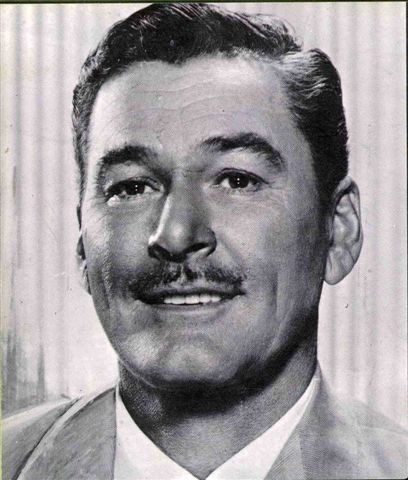
Come in like Errol Flynn!

Papua New Guinea's rich and colorful history is littered with the names of likewise gaudy characters that have carved a niche for themselves.

Few, however, have made more of an impact than the flamboyant and swashbuckling Errol Flynn.

With the discovery of very good paying gold in 1926 at Edie Creek above Wau - six days walk from Salamaua - a gold rush of massive proportions started, not only from Australia but from beyond.

With the major discovery of gold came the last two categories of what the White population of New Guinea was divided into: Missionaries, Moneymakers, and Misfits or Fools, Freaks, and Failures.

Not least among the Misfits was the one who became a Hollywood star - Errol Flynn.

And none, probably, has done more to promote PNG than this lovable rogue who went on to become the world's top sex symbol.

The superb scenery, glorious hills and harbours, white beaches, and shady copra plantations are still today as Flynn describes them in his famous autobiography, My Wicked, Wicked Ways.

Even though Flynn is long dead- through excessive drinking and womanising - he still lives on in PNG.

Places like Salamaua, Wau, Bulolo, Lae, Finschhafen, Port Moresby, Laloki, Rabaul, Kavieng, Madang, and the Sepik River have become famous because of My Wicked, Wicked Ways.

His book remains a bestseller to this day and, in places like Salamaua or Wau - just to name two - people still talk about him.

"Flynn used to drink here,"they'll tell you in Salamaua, or, "this is where he went mining for gold", they'll reminisce in Wau.

Legendary Australian patrol officer, JK McCarthy, recalls in his book, Patrol Into Yesterday, how Flynn stepped in once to protect a small man from a bully: "It was done in the most dramatic style and all of us should have foreseen that he had a movie career ahead of him. There was the noisy bar, the crowd of onlookers, the challenge and the hero knocking the loud-mouthed one cold, right on cue."

Flynn has been called many names: adventurer, thief, lover, liar, murderer, and Hollywood legend.

He probably didn't do much good while he was here, but nevertheless, he placed PNG on the world map as a place where a young man can find himself.

The true-life story of movie superstar Errol Flynn was more dramatic and incredible than even the wildest of his many Hollywood-starring roles.

He may have more swashes then anyone before or since, but Flynn was also a liar and a thief, an incurable seducer of women (and men), a fraudster, hustler, and even murderer... all before the age of 21!

Before the age of 21, Flynn was tried for murder.

He was a thief, a liar, a bad boy in every instance,he was a gigolo, a hustler, and was even accused of being a spy - then he conquered Hollywood.

Wildly promiscuous from an early age, his teenage years were a frantic roller coaster ride of sex, adventure, ill-gotten riches, drink, sex, fighting... and more sex.

Panoramic portrayals of his amazing past have brought the true legend of Flynn explosively to life, blowing the lid off his rabble-rousing time in the gutters of Sydney, and his death-defying escapades searching for gold in the jungles of New Guinea.

Flynn was simply the sexiest, most charismatic star of the Golden Era of Hollywood.

The epitome of a lusty, virile hero, Flynn turned the World into his stage as millions fell for his wicked, wicked ways.

Superstar and legend, Errol Flynn was Hollywood's symbol of male virility during the Golden Era of moviemaking.

He was adored by fans worldwide, admired by millions, despised by many.

Flynn was the quintessence of the swashbuckling hero, but his on-screen exploits were pale echoes of his real life adventures.

Flynn's prowess with women was so infamous that the expression "Come In like Flynn" became a common phrase used to describe the ease with which a man might conquer a woman.

In fact, after a life rocked by success and scandal, Errol Flynn died under dubious circumstances aged 50, supposedly while having sex with a woman.

As an actor, Flynn built the foundation for characters later elaborated by Mel Gibson, Arnold Schwarznegger, Harrison Ford, and Kevin Costner.

He died at age 50 of a heart attack, having had a good run in Hollywood with 53 films - some for Jack Warner, others contracted out to MGM - across from great female players such as Olivia De Haviland, Maureen O'Hara, Bette Davis, Greer Garson and others.

Errol Flynn was born Errol Leslie Thompson Flynn on June 20, 1909 in Hobart, Tasmania, Australia.

His parents were Professor Theodore Thompson Flynn and Lily Mary Young.

Professor Flynn was a well-known marine biologist and zoologist who later went on to receive an MBE for his work at Queens University, Belfast.

Errol also was a direct descendant - on his mothers' side - of Midshipman Young from the infamous HMS Bounty Mutiny of 1789.

The 18-year-old Errol Flynn - with an already shady background - arrived in New Guinea in October 1927 to make his fortune on the newly discovered goldfields at Edie Creek, Wau.

From his arrival he tried unsuccessfully to bluff himself into money as a cadet patrol officer, gold prospector, slave recruiter, dynamiter of fish, trapper of birds, manager of coconut and tobacco plantations, air cargo clerk, copra trader, charter boat captain, pearl diver and diamond smuggler.
He was also a prolific writer and contributed regularly to Australian newspapers and magazines with absorbing tales about the untamed jungles of New Guinea.

Flynn soon discovered that the Australian government had a severe shortage of patrol officers, and he hoped to bluff his way through in Rabaul, but this colonial career was short-lived when his background was discovered.

He moved restlessly from one job to another, acquiring many different skills but no great competence.

Hoping to get rich fast, he lived by his wits and ran up many debts.
In Rabaul, although considered a likeable and capable young man, his reputation for roguery quickly spread and he ceased to be with the Administration.

His best memory of Rabaul was of "a wonderful saloon where you encountered everything the world could yield up - miners, recruiters, con men, thieves, beachcombers, prospectors - cubicles both downstairs and upstairs, several phonographs playing, cards".

Long after Flynn had left he was remembered around Rabaul, mostly for the unpaid bills he left behind.

Even after he became famous as a film star, he never paid any of those bills.

If people wrote asking him to pay, he would send them autographed photographs of himself, saying these were much more than what he owed them.

The story is told of the famous occasion when a film of Flynn's was showing in Rabaul, and at the end of the credits, a dentist to whom Flynn owned a large account jumped up and shouted: "And teeth by Eric Wein."

In 1928, with money from his work on a coconut plantation and a loan from a shipping company in Sydney, Flynn bought a schooner and took an American film company to make a documentary about headhunters on the Sepik River.

He recalls: "The last place in the world I wanted to go was the Sepik River, a human graveyard. I cruised to the north-east coast, where the red, muddy Sepik River flowed into the sea.

"We moved into the broad stream, running against a strong current.

"The Sepik is a monster waterway 600 miles long.

"No white man has been up the river more than 200 or 300 miles and the nature of the river or the land beyond that was practically unknown and remains little known to this very day.

"The waterway was heavily populated with mosquitoes, kanakas, and pukpuks (crocodiles).

"As we traveled the garamuts, tomtoms made of crocodile skins, kept up a steady communication: 'Outsiders, big magic on the water, beware'.

"When we came in close to shore and tried to get film of the natives, we got arrows instead, real ones, and poisoned."

In 1929, Flynn sailed from the offshore islands to Salamaua, to fulfill his original ambition.

He hired eight men, bought marching gear and gold-digging equipment, and set out for the goldfields at Edie Creek.

The tough march from Salamaua to Wau - through a region filled with blackwater fever and poisoned arrows - tested men's limitations.

The rigorous walk between Salamaua and Wau took up to a week, Flynn writing of how the gold fields had to be approached from Salamaua by 10 days'smarch through leech-infested jungle, in constant fear of ambush, and at night wondering 'whether that crawly sound you heard a few feet away might be a snake, a cassowary or maybe only a wild boar razorback.I have seen Central Africa, but it was never anything like the jungle of New Guinea'.

At Edie Creek, temperatures were high during the day and fell steeply at night.

There was an epidemic of dysentery and malaria, with no trained doctors to attend to the sick.

His men left, and Flynn quickly realised that, "I had neither the provisions, nor the money, nor the necessary men to work a claim properly. The competition with other prospectors who were better set up was too much".

He lost everything he owned and was forced to take a job as manager of a tobacco plantation in Laloki, near Port Moresby.

Six months later, Jack Hides, a flamboyant patrol officer and old Papua hand, turned up at Flynn's place and noted in his diary that Flynn was doing a creditable job.

Flynn had criticised the Australian administration in a letter to his father in Tasmania.

Writing to The Bulletin soon after his arrival, he protested against a government policy that affected his own plantation, the high import taxes imposed on tobacco: "Papua is one of the natural homes of the tobacco plant, and, as Papua is part of the Commonwealth and is in receipt of a yearly subsidy of £40,000 from the federal government, the obvious market for its tobacco is Australia. But the market is closed by a prohibitive tariff."

At Laloki, the man who was to become the world's top sex symbol, wrote about his affair with Tuperselai, a beautiful Papuan girl: "We let ourselves be carried down by the current of the stream and, on the shores, in a secluded nook of shade, at last we made love.

"I can only say that I don't know when again my heart pounded so.

"I was less alone and soft-aired Laloki River is one of my most precious, poetic memories."

In January 1933, in the bush near Finschhafen, Morobe District, Flynn began to "blackbird" local labourers.

His diary recorded that enslaving human beings also involved an element of trust - which was frequently betrayed - and described his conversation with a tribal chief who said he "had given me all their young men and I must look after them well. He enjoined me that I must not sell any of them and when their time had finished must bring them back myself".

Flynn later observed that, "If you spend more than five years in New Guinea you were done for, you'd never be able to get out, your energy would be gone, and you'd rot there like an aged palm".

In April 1933, he sold his property and suddenly left the island with some smuggled diamonds and a case of malaria that would plague him for the rest of his life.

During his years in New Guinea, from the age of 18 to 24, Flynn came to maturity and formed his adult personality.

New Guinea brought out the worst and the best in him.

He was willing to try anything, but wouldn't work at anything for very long.
He said, "There is no thrill like making a dishonest buck" and always expected others to support him when he had no money of his own.

He lived by his wits, bluffed his way through crises, and used his fists when he had to.

One of Errol Flynn's greatest loves was writing.

Apart from his autobiography My Wicked, Wicked Ways, he wrote two semi-autobiographical novels Beam Ends and Showdown and in addition wrote articles for the Sydney Bulletin whilst in PNG under the pen-name "Laloki"; for the magazine Photoplay during his first years in Hollywood and his "holiday" in Spain during the Civil War; and then in 1959 he wrote about the Cuban Revolution during which time he was present alongside Fidel Castro.

These writings are compiled in a book called "From a Life of Adventure: The Writings of Errol Flynn" ed. by Tony Thomas.

Errol Flynn loved many women, but he is said to have once confided to a close friend that two of his greatest loves were New Guinea, and writing.