Sunday, September 30, 2007


The need for PNG to improve its ICT

Picture at left: Personal computers should be made available to underprivileged demographic groups in PNG
The overwhelming response to my two articles on Information and Communications Technology (ICT) in Papua New Guinea, from both within the country and abroad, shows the urgent need for the country to improve its ICT in this rapidly-globalised world.

I was overwhelmed by the responses to my articles in The National on Friday September 7 titled “Building your own website” and the one last Friday titled “Internet cafes and the digital divide”.

This week, I’d like to share with the readers of this column, some of the many responses to my articles over the last two weeks.

I was inundated by the constant stream of SMS text messages and emails from people, particularly small business men and women wanting to build their own websites, as well as those complaining about the very high Internet usage fees being charged in PNG.

A good friend of mine built his own website free of charge after reading my first article without having to pay exorbitant fees for a website designer, a domain name, or Internet Service Provider (ISP) rentals.

It was a dream come true for this friend of mine, who has been trying for years to have his own website, only to be met with the brick wall of high costs.

A handful of individuals and small business men and women are now in the process of building their own websites, while I am advising several others all over the country how to build their own, without being ripped of by unscrupulous companies and individuals.

Second-year Divine Word University IT student Julia Komoru commented: “We have completed a unit on website developing recently, and it’s not at all difficult to create a website.

“It’s really hard to understand why individuals and organisations charge so much for doing something so simple.”

Last Friday’s article on the very high Internet rates in this country, particularly those being charged by ISPs in Port Moresby at their cafes, brought back a swift and emotional response.

I particularly compared the high rates by charged by Data Nets and Datec to the low rates being charged at the RH Hypermart and the Sports Inn.

“I read with interest your article in the Weekender Section on ‘Internet cafes and the digital divide’,” wrote Data Nets general-manager Sundar Ramamurthy

“The piece that caught my eye was your basic comparison between our Cafe pricing (as an ISP) and those at the Sports Inn and RH.

“The question that is asked is ‘Why are our prices much higher than your favourite places i.e. Sports Inn and RH?

“Answer:

“1) Like any business the charging is market-driven. It could very
well be that RH and Sports Inn subsidise their Internet access so
people come in and have a drink or buy goods. This is often called a
‘loss leader’ that attracts customers to come to their shop to buy
other goods whilst they are on the Internet.

“2) One needs to compare the speed. Fifteen minutes at a more expensive
place might be equal to 30 minutes at a slower cafe. So price needs to be
compared to performance. In Internet terms this means speed and
throughput and value.

“In broad terms, there is broad concurrence that cost and reliability
(power and telecommunications) are critical to the future of PNG's
communications requirements.”

Datec general-manager Tony Westaway wrote: “I read with interest your article in the National on Friday 14 September 2007.

“You talked of a need to develop and expand the ICT industry and the country keeping in touch with world standards.

“You mentioned that students need to be educated on the potential of ICT.

“Datec is holding a Technology Expo over the 12th and 13th of October 2007 at the Crowne Plaza Hotel in Port Moresby.

“We will have a significant number of International exhibitors in attendance.

“It will provide an opportunity for business people, IT specialists, and most importantly students, to see the most recent developments in Information & Communication Technology.

“Datec has already distributed over 1000 free tickets to students in technical colleges, UPNG and TAFE, and other institutions in Port Moresby.

“By the way Datec is currently reviewing its charges for the Internet Café in Port Moresby.”

An anonymous reader wrote: “Internet access in PNG is much more expensive than you probably realise.

“For example Datec charges K100 for 80MB Wireless Internet access.

“In New Zealand KOL charges K100 for 10GB or 10,000MB Broadband Internet access.

“That is, PNG is 125 times more expensive! Further the speed is considerably slower!

“My understanding is that these ridulously high charges are because of the ridiculously high charges Telikom charges Datec and other ISPs.

“I can only afford very limited Internet access compared in PNG compared to what I used to be able to afford in New Zealand.”

Sam Roth wrote from Japan: “Thanks for keeping us informed on the development of ITC in PNG, especially with Internet.

“I have a good collection of your latest articles on IT and am quite pleased with your work.

“Keep up the good work and know that you have fans all over the world.

“In fact, it is an area of interest for me especially my Masters Thesis, and am amazed that I am not alone in this to make our beautiful country catch up with the rest of the world in ITC.”

Sam signed off with a quote from Einstein: "Among every impossibility lies an opportunity."

For comments and feedback, email the author at malumnalu@yahoo.com or SMS 6849763.

Internet cafes and the Digital Divide


Picture at left: Making the Internet affordable and accessible to the people...the Comserv Internet cafe at RH Hypermart
Being a regular user of Internet cafes in Port Moresby, it quite surprises me that cafes owned by Internet Service Providers (ISPs) charge among the highest rates.

For instance, Data Nets charges K5.50 for 15 minutes, K11 for 30 minutes, and K22 for an hour.

The country’s largest ISP provider, Datec, charges K10 for 15 minutes, K15 for 30 minutes, and K20 for an hour.

Rates charged by major hotels in Port Moresby vary but can be quite astronomical.

Compare these to the low K3 for 15 minutes, K6 for 30 minutes, and K12 for an hour being charged by the Comserv café at the RH Hypermart.

Closer behind is the café at the Sports Inn which charges K6 for 15 minutes, K9 for 30 minutes, and K12 for an hour.

I regularly haunt the RH Hypermart as it has arguably the best and cheapest Internet café in Port Moresby.

In theory, Internet cafes should be making the Internet affordable and accessible to the general public, however, they seem to be going the other direction in this country, making the Internet unaffordable and inaccessible.

High Internet costs are a major setback for Small and Medium Enterprises (SMEs) who don’t have Internet access, as they use these cafes to try and sell their products and services.

It is also a turnoff for tourists, students doing research, as well as members of the general public as they try to check their email as well as surf the Internet.

Talk about trying to create a knowledge-based economy!

I have heard many complaints from tourist friends about the very high Internet usage fees being charged in Papua New Guinea.

Perhaps Telikom and the ISPs in this country should look at countries like Singapore, who have very-efficient and cheap Internet services.

Anyone who’s passed through Singapore’s world-famous Changi Airport will tell you that you can access the Internet for free all around the terminal buildings.

The hotel I was staying at in Singapore last month offered free Internet services.

Strolling through the streets of Singapore’s Geylang district, I was able to use the Internet at one of the many such roadside cafes for about S$2 an hour.

I was also able to talk to my wife in Port Moresby over the Internet – Voice over Internet Protocol (VOIP) – for only S$1 a minute.

High Internet costs contribute towards making the much talked about Digital Divide in Papua New Guinea an enormous barrier to the ability of the people to participate in and benefit from the digital economy.

Measures of the Digital Divide include:
Affordability – Can underprivileged small businesses and individuals afford to use quality computers and Internet services?
Internet access – Are there wide band communication networks accessible to businesses and households both in urban and rural areas?
Personal computer penetration – Are personal computers economically owned by the underprivileged demographic groups?
Training – Are there training programmes of computer and Internet provided to underprivileged sectors of the population?
Relevant content – Are there relevant software packages, local language contents rich enough to address the needs of the underprivileged population?
IT sector – Are there efficient ICT industries who are able to serve the needs of local businesses and individuals?

On Wednesday last week, I attended a seminar organised by the PNG Computer Society, being someone who is very much interested in ICT.

Society secretary Sadiq Ali said as PNG gradually developed its economic and political sphere, there was an imperative need for the ICT industry to develop and expand in the country.

“PNG, although it is not apparent it is suffering from a need of advanced communication industry, the country needs to keep touch with world standards of information systems and networking,” he said.

“Costly as it may seem, the investment will do good to match the first-rated countries and furthermore, the future generation of this nation will be the ones to make use and improve on this.

“Coming from an educator’s angle in ICT, PNG needs to educate its younger generation on the potential of the ICT and the good it will do for the economy.

“Students need to be educated on the new technology and innovation so that they too become independent thinkers and networkers.

“The commercialisation of the ICT industry provides a good opportunity to develop and inspire the young.”

Meantime, I was overwhelmed by the response to my article in The National last Friday titled “Building your own website”.

I was inundated by the constant stream of SMS text messages and emails from people, particularly small business men and women, wanting to build their own websites.

They concurred that companies and individuals are benefiting from the ignorance of the little people by charging them huge amounts of money to build a website for their small businesses.

And after being ripped off, the little people then feel the brunt of paying excessive fees for a domain name, regular rental to the ISP, as well as Internet usage fees to Telikom.

The response to my article highlighted, at least to me, the need for training programmes of computer and Internet to be provided to all sectors of the community, particularly our SMEs.

For comments and feedback, email the author at malumnalu@yahoo.com or SMS 6849763.
Building your own website

Several companies and individuals in Papua New Guinea are profiteering from the ignorance of our little people by charging them huge amounts of money to build a website for their small businesses.

And after being ripped off by these companies, the little people then feel the brunt of paying excessive fees for a domain name, regular rental to the Internet Service Provider (ISP), as well as Internet usage fees to Telikom.

Caption for above: www.freewebs.com is one of the most popular free website building and hosting websites in the world.jpg

In a small economy such as that of PNG, small businesses cannot survive with such exorbitant costs.

This should no longer be the case, as it is quick and easy to design a website using templates freely available on the Internet, where you do not have to pay for a domain name or ISP rentals.

Your just have to pay for your Internet usage fee at the nearest Internet café if you don’t have Internet access in your office.

More often than not, these small PNG business men and women, are not Internet-savvy and will not know basics like uploading their website onto the Internet or registering their website with Internet search engines and web directories.

The situation for many Small and Medium Enterprises (SMEs) all over the world, including PNG, is that an entrepreneur owns a small or medium enterprise.

The company produces an interesting product such as organic coffee or arts and crafts, or provides a novel service such as taking tourists across the Kokoda Trail.

The problem: How do we use the Internet to sell the product or service?

The general methodology is to plan, analyse and enact E-marketing activities.

This methodology can be used by anyone who wants to use the Internet to access customers.

Components include:
Goals – What do we wish to achieve through E-marketing?
Resources – What resources can we expect to support our actions?
Actors – Who are the marketing actors in the E-marketing process?
Spaces – Where will our E-marketing take place online?
Actions – What specific E-marketing actions should we take?
Outcomes – What outcomes should we expect from our E-marketing activities?

Competing on the Internet is different because it is highly fragmented and holds more than 8 billion web pages.

The Internet features a “winner-take-all market” where a few winners get a lot of traffic while most sites get low traffic

A short-term goal may be stated in this way: “Our goal is to attract 100,000 visitors to the page in one week.”

A long term goal may be described in this way: “Our goal in the next one year is to get 3 million visits and 50,000 downloads of application forms for new accounts.”

Typical goals include:
Traffic to a website – How many hits, unique visitors?
Product purchase – How many visitors buy the product?
Brand excitement - How many visitors write about the product and tell others?
Repeat visits – How many visitors come back to buy more?

Existing resources should include the website and staff.

New resources to be considered include:
Do you have a marketing budget to attract more customers to your site?
Do you have a technology budget to build a better website and other digital services?

Actors’ orientation towards the company will be friendly, agnostic, or hostile.

The important decision is should you create your own website or go through a platform?

When you create your own website, it is hard to build awareness and traffic, and is a risky investment.

On the other hand, it is not a sure bet to go through a platform, and you must share revenue with the platform.

Making a free website these days is fast and really easy, which is certainly good news for SMEs all over PNG.

Government departments, statutory organisations, non-government organisations, sporting teams, provinces, villages, families, individuals, and many more should also be looking at seriously building their own website if they don’t already have one in this rapidly-globalising world.

Each of our 109 MPs should have their own website to share information with their voters and the people of PNG.

You can also create your own online Blog – which basically is an online diary - free of charge in which you can broadcast your views to the whole world.

I have my own Blog http://malumnalu.blogspot.com/ in which I feature some of the stories I have written about PNG and I have received response from around the world.

You can also send short video clips to YouTube, one of the most-popular and fastest-growing websites in the world, free of charge.

Many world leaders, including Australian Prime Minister John Howard, use YouTube to broadcast their video clips.

All over this increasingly-globalised world, a massive Information Revolution is taking place as economies use Information and Communication Technology (ICT) as a passport to what economists call the “New Economy”.

I have said before, and will say it again, that the ICT monopoly in PNG, exorbitant telephone and Internet costs, as well as lack of knowledge about ICT and E-business all contribute to this digital divide.

Papua New Guinea will continue to remain light years behind the rest of the world if we do not jump on the ICT bandwagon in this globalised world.

The digital divide within PNG is an enormous barrier to the ability of the people to participate in and benefit from the digital economy.

Access to Internet, adequate infrastructure, human capacity building and appropriate policies on ICT are central issues in addressing the digital divide.

Success in this globalised world is predicated on ICT knowledge and successful knowledge-based economies will be based on the efficient and widespread use of ICT by all sectors within any given country.

Small and medium enterprises, the backbone of the PNG economy, must be prepared with ICT knowledge.

If they are not ICT-savvy, they will not receive the benefits of globalisation and they will be left behind the rest of the world.

For comments and thoughts, or assistance with building your website, contact the author on email malumnalu@yahoo.com or SMS 6849763

Thursday, August 23, 2007


Thunderstorm


There was a big thunderstorm in Taipei yesterday afternoon during the third day of our APEC OVOP Workshop on E-Commerce.
At left is a picture of the Taipei 101, the tallest building in the world, being hit by lightnight.


There was loud thunder, lightnight flashes, and heavy rain.


This followed on from last Saturday's typhoon which lashed Taiwan.


Fortunately, the thunderstorm ended and the sun came out to shine.


Douglas Keari and I visited an electronics shop in Taipei before returning to the Grand Hotel to rest.


Wednesday, August 22, 2007


Death of the Macdhui


A small, but significant, anniversary took place on Monday June 18, 2007.


That was the 65th anniversary of the sinking of the motor vessel Macdhui, sunk in the Port Moresby harbour by Japanese bombs in June 1942.


One of the best-known landmarks in Port Moresby is the wreck of the Macdhui in the waters just off the Port Moresby Technical College at Kanudi.


Many people just drive or walk past without knowing the significant role that the Macdhui played in the development of Papua New Guinea.


Recently, I was asked to be a tour guide for a retired US veteran of the Korean and Vietnam wars, and one of the World War 11 relics I showed him was the wreck of the Macdhui.


As we stood at Kanudi looking out to sea, I wondered what stories the deep blue sea, the rolling hills, and the wide sky could tell me about what they saw that fateful day in 1942.


It was then that I realised that June 18, 2007, would be the 65th anniversary of the sinking of the Macdhui and decided to put pen to paper.


The Macdhui, 4630 tonnes, built in Glasgow, Scotland, in 1930, was owned and operated on the Australia-Papua New Guinea service by Burns Philp and Company Limited.


Macdhui’s maiden voyage took place in March 1931, sailing to Suva, Fiji, via the Azores, Jamaica, and the Panama Canal, with a load of coal.


Then the Sydney to Rabaul route for Burns Philip with 167 first-class passengers’ accomodation.
On June 20, 1931, a fire broke out on another voyage between Madang and Lae, but the passengers were safely taken ashore in lifeboats.


MacDhui was safely towed to Salamaua, New Guinea's then administrative capital, by Neptuna, another Burns Philp & Co vessel.


After patching at Salamaua, MacDhui was sailed to Sydney for six weeks of repairs.


With the onset of war the ship was commandeered by the Navy and used to evacuate civilians from New Guinea, then carrying Australian troops back to Port Moresby.


On June 17, 1942, the Macdhui was attacked by Japanese bombers as it was discharging to lighters in Port Moresby harbour.


It began zigzagging around the harbour but took one direct hit which caused considerable damage.


The vessel later went alongside the main wharf to unload dead and wounded.


The next day, at 10.45am, there was another air-raid warning and the Macdhui moved out into the harbour and began manoeuvring.


Soon after the raid began, it took a direct hit.


The captain headed towards shallow water where his ship finally keeled over onto a reef.


Ten of the crew of 77 were killed along with five Australian gunners from 39 Battalion.


Altogether, the Macdhui took four direct hits.


The dramatic sinking was captured on a black and white movie film shot by the famous Australian cameraman, Damien Parer from a nearby hilltop.


The loss of the Macdhui was a great blow to the morale of the Australian troops in Port Moresby.


Until then it had been the only regular and reliable link between Australia and Port Moresby.


After the war, the Australian government compensated Burns Philp for its loss.


The wreck itself is now deeply pitted and corroded under the waterline.


It is gradually breaking up but even if it does slip completely under the surface part of the Macdhui will remain in Port Moresby.


In the late 1960s the mast was removed and now stands outside the Royal Papua Yacht Club as a memorial to those who died.


One of the bells was erected in the tower of St John’s Anglican Church in Port Moresby and to this day still calls parishioners to worship.


Former vice-commodore of the Royal Papua Yacht Club, Trevor Kerr, tells of a supernatural experience in 1979 when the ashes of the late Captain J. Campbell, skipper of the Macdhui, were laid to rest with his ship.


The powered launch Tina, owned and skippered by yacht club committee member Russ Behan, approached the wreck with Captain Campbell’s two sons, a United Church minister, and Kerr on board.


“The weather in the harbour was unusually placid, not a zephyr stirred,” writes former Port Moresby diver Neil Whiting in Wreck and Reefs of Port Moresby.


“The sea was so clear that the superstructure of the Macdhui could be seen below the surface of the water.


“There was not a ripple on the surface or current drift to break the calm.


“With heads bowed in prayer, the United Church minister upturned the urn containing Captain Campbell’s ashes and scattered the contents into the sea.


“Trevor, observing the ceremony in a more detached fashion than the others, observed the most amazing sequence of events.


“The ashes initially clouded the water as one would expect, but almost immediately condensed into a form similar to a teardrop.


“Then, the most amazing phenomenon occurred.


“The teardrop cloud quite rapidly crossed the six-metre intervening gap between the Tina and the Macdhui and disappeared into the hull.


“At a nudge from Trevor, Russ glanced up and also observed the incredible event.


“The engines of the launch were quickly started and in a state of chilled awe, the funeral party motored away.


“Captain Campbell had returned to his ship.”

Tuesday, August 21, 2007

Back in Taiwan

Hi everyone,
I've travelled back again to Taiwan for another workshop, this time the APEC OVOP (One Village One Product) Workshop on E-Commerce from August 20-24.
I arrived in Taipei on Sunday August 19 with Douglas Keari from the Papua New Guinea Tourism Promotion Authority.
Douglas is an IT Officer by profession.
The weather was very bad after a powerful typhoon lashed Taiwan on Saturday August 18 and it was a very-turbulent four-hour ride from Singapore on a Singapore Airlines Boeing 777.
We left Port Moresby for Singapore on Thursday August 16 and spent three days in Singapore.
I'll keep you posted.

Regards,

Malum.

Grave robbers wreak havoc in Lae cemeteries

Grave of the late Mathias Nalu, May 2006


There are some things in life that are so hard to comprehend.
These things make you wonder why some people have the audacity to carry out such acts, which include desecrating the memory of loved ones that families and relatives have laid to rest.
These people can stoop as low as stealing brass plaques from graveyards to sell to unscrupulous scrap metal dealers for a fast buck.
In my home town of Lae, this practice has been going on ever since these dealers - who prey on Papua New Guinea's massive unemployment problem - set foot.
Today, a visit to cemeteries in Lae, will show you many headstones on graves that are missing brass plaques.
A case in point is the old graveyard up the road from the famous old Lae airport.
This graveyard is the final resting place for many of the pioneers of Lae and Morobe province, mainly expatriates, and was a relic of a bygone era where visitors could learn so much just by reading the plaques and headstones.
Rest In Peace - RIP - those buried here are supposed to be.
However, this has not been the case over the last 10 years or so, as grave robbers without a care in the world have plundered basically all the brass plaques.
In my younger days, as a journalist in Lae, one of my hobbies used to be wandering old graveyards and reading the plaques and headstones as I could learn so much history.
Sadly, I can no longer do this, as many of the plaques are gone.
And the irony is that people are not making any noise about this daylight robbery going on in front of their own faces.
The grave robbers are desecrating graveyards at the old Lae airport, Second Seven (Malahang), and even my Butibam village, to name a few.
Heaven knows what would happen to the Lae War Cemetery if there wasn't tight security around to prevent these intruders.
We never thought that this practice would come to Butibam until a few years ago when plaques started disappearing overnight.
In May last year, while on a working trip to Lae, I visited my father's grave at Butibam and took pictures.
A short time later, I was surprised to receive a call from my mother, who was in tears as she told me that Dad's plaque had disappeared to these unprincipled grave leeches.
The entire family, just like me, was shocked as we wondered what exactly Dad or we had done to deserve this.
The plaque, to this day, has not been replaced as I somehow have to find the exact wording for a replacement.
My father, the late Mathias Nalu, died on September 17, 1993, after more than 35 years of service with the Education Department as a teacher and later a school inspector.
He had just retired and received his final entitlements, however, never got to enjoy the fruits of his labour as he suffered a severe stroke from which he never recovered until his untimely passing.
Dad was one of those old Dregerhafen and Finschhafen boys who was always proud to call Michael Somare, Paulias Matane, the late Alkan Tololo, and many more, "old school mates".
Dad's school mates went on to become great leaders of this country while he chose to take the backseat as a humble teacher and school inspector.
Hundreds of teachers and public servants packed the St Andrew's Lutheran Church at Ampo in Lae for his funeral service.
The Nalu family was humbled by this show of respect from so many people from all over Lae, Morobe province, and PNG.
I realise that times are hard, but to steal brass plaques from graves to sell to some dodgy scrap metal dealer for a quick buck is unforgivable.
The new government should put in place tough legislation to combat those who steal plaques from graves and those who buy them.
These offenders, as part of their rehabilitation, could be sent to Salamaua where the villagers there will teach them how to look after and respect old graveyards.
The old Salamaua cemetery is a relic of a bygone era of the 1920s and 1930s when fevered gold miners from all over the world converged on this idyllic part of the world.
To visit the old Salamaua cemetery is to step back in time, to a rip-roaring period when gold fever struck men from around the globe.
Today the old Salamaua cemetery, or what remains of it, is well tended to by the local villagers.
The graves are mute testimony to the days when European man, running a high gold fever, was claimed by a fever of a different kind.
I have a very simple message for those who removed my father's plaque and those who bought it.
"May God forgive you.
"I find it very hard to do so."

Welcome to Taiwan

That's me on the Taipei 101, the then tallest building in the world
Taipei 101, the then tallest building in the world
I must admit that it was a big culture shock for me when I arrived in Taiwan capital, Taipei, on the night of Sunday July 22 after a three-hour flight from Narita Airport in Tokyo.
Yes, I’d heard from friends and colleagues about the technological powerhouse that is Taiwan, but seeing is believing.
Neon lights bedazzled the night, skyscrapers were everywhere, and vehicles of every description zoomed by on super highways.
In the distance, a juggernaut soared into the sky, which I correctly presumed to be the 101-storey Taipei 101, the tallest building in the world.
Welcome to Taiwan!
I was in Taipei to attend a week-long APEC Digital Opportunities Centre (ADOC) Small and Medium Enterprises (SME) Entrepreneurship Workship funded by the Taiwanese government.
Taiwan has a total land area of only 36,000 square kilometres, a population of 22.7 million, and per capita income of US$15,659 (K47, 000).
It is the world’s 17th-largest trading nation and has 1.25 million enterprises, 1.22 million (97.8 per cent) of whom are SMEs.
While advanced Asian countries have emphasised large corporate units, the Taiwanese economy is dominated by SMEs.
While this might seem a disadvantage, the industry is structured in such a way that clusters of SMEs can service larger enterprises.
The Taipei 101 epitomises Taiwan’s reach for the sky to become one of the most-prosperous and competitive economies in the world.
With a height of 508 metres – and 101 stories above ground and five stories – the Taipei 101 has surpassed the 462-metre Sears Tower in Chicago and the 451-metre Petronas Twin Tower in Malaysia to acquire the title “world’s tallest building”.
Designed by world-renowned architect C.Y. Lee, the exterior of the building resembles bamboo segments, with eight stories to each segment because the number “8” signifies prosperous growth.
Each segment is shaped like a sceptre, with ancient coins on the exterior of the 26th floor to give this modern building a Chinese style.
To prevent the building from swaying during typhoons or earthquakes, an 800-tonne, US$4 million, ball-shaped damper is used to dissipate lateral vibration to a spring system underneath.
For the first time in architectural history, the damping system is not hidden, but part of the building’s design.
The world’s largest damper ball has a diameter of 5.5 metres and is visible from the 88th and 89th floors.
Taiwan is one of the most-prosperous and high-tech countries in the world, and there is no such thing as poverty or unemployment.
Its “cradle to the grave” health care and education systems are rated as among the best in the world.
Everyone seems to have a mobile phone and computer, and there is wireless Internet everywhere, meaning you can use the Internet on your laptop anywhere, without the need for a wire connection.
Taiwan, in fact, is now the world leader in producing notebook computers.
Eveyrone seems to have one or more credit cards!
The capital Taipei never sleeps and there are just so many people.
And yet, just 50 years ago, Taiwan was a resource-poor under-developed tropical island.
Through sustained good policies over the past few decades, it has lifted its population from poverty, joining the ranks of the most-prosperous and competitive economies in the world.
Unlike Korea, Thailand, Indonesia, Malaysia and Hong Kong, it was able to weather quite unharmed the Asian financial crisis in 1997.
Today Taiwan is a technological powerhouse that ranks among the world’s top producers of notebook personal computers, flat panel displays, modems, motherboards, and other electronic components and products.
In 2004 it ranked fourth globally in the production value of its IT hardware.
It is also fifth in the World Economic Forum’s 2005-2006 Global Competitiveness rankings, with a strong showing in the area of technology and innovation, ranking third in the world in the technology index.
The 2005-2006 Global Competitiveness Report highlights Taiwan’s exceptional strength in technology issues, including an impressive capacity for innovation, firm-level technology, absorption, university/industry collaboration in research, and its pre-eminent position in the use of the latest technologies, from mobile telephones to personal computers and the Internet.
Taiwan’s transition from a poor agricultural society into an increasingly-sophisticated powerhouse of high-technology manufacturing and the world’s leading producer of information and communication technology is, without doubt, one of the most-compelling development stories of the past half century.
In his case study on Taiwan in the 2004-2005 Global Information Technology Report, F.C. Lin traces the evolution of Taiwan’s ICT industry through the first economic miracle of Taiwan’s transformation from an agricultural to an industrial economy (1953-1986) and describes the second miracle of its industrial restructuring (1987-2000), when low technology industries were forced to relocate overseas and were replaced by technology-intensive industries, particularly in the information technology sector.
Lin attributes these to the following factors: strong government leadership in maintaining a high growth rate and a strong fiscal situation, manpower development with a high level of science and technology graduates, the coalescing of high-tech clusters following the model of Silicon Valley, the development of venture capital supporting hi-tech small and medium enterprises, and a highly-energetic private sector.
He identifies the future challenges as breaking into the advanced industrial and research areas of application integration, technological innovation, and standards formulation as global competition reduces profit margins.
In addition to manufacturing them, Taiwan is already moving fast to adopt ICT.
The Institute for Information Industry (III) estimates that there were 8.92 million Internet users in Taiwan as of June 2004, with an Internet penetration rate of 39 per cent, growing 2 per cent the previous year, and showing signs of reaching saturation.
About 12.2 million people, of 54 per cent of Taiwan’s population, were general Internet users – slightly more men (56 per cent) than woman (52 per cent).
As for age groups, 95 per cent of people between 15 and 24 years, but less than 10 per cent of people over 60 were Internet users.
Papua New Guinea can learn so much from the Taiwanese experience if we are to take our place in this ever-changing world.

Bridging the Digital Divide

An electronics shop in Taipei, July 2007
It was quite ironic that from July 23-27, while there was an all-out Information and Communication Technology (ICT) battle in Papua New Guinea between Digicel and Telikom, APEC member countries including PNG gathered in Taiwan to discuss this phenomenon of the so-called “digital divide”.
I happened to be in Taiwan at that time and could only shake my head in bewilderment as I browsed The National and Post-Courier newspapers on hi-tech wireless Internet for the latest news from home.
I might add here that while the newspapers were spot on, same could not be said of the Electoral Commission website, as there were no election updates the whole time I was in Taiwan.
The ICT monopoly in PNG, exorbitant telephone and Internet costs, as well as unupdated websites for such an event as the PNG national elections, all contribute to this digital divide.
Taiwan has a very reliable and cheap telecommunications system and is a hi-tech country where almost everyone has a mobile phone and a computer.
Wireless internet is everywhere, meaning that you can use your laptop anywhere, without the need for a wire connection.
Papua New Guinea will continue to remain light years behind the rest of the world if we do not jump on the ICT bandwagon in this globalised world.
As APEC member economies including PNG strive to build their ICT infrastructure necessary for the development of what economists called the “New Economy” – based on ICT – the phenomenon of the Digital Divide is also emerging.
To tackle the divide, the establishment of the APEC Digital Opportunity Centre (ADOC) was advocated by Taiwan at the 11th World Leaders’ Economic Summit in Bangkok, 2003.
It was envisaged as a concrete step towards realising the goals set out by APEC leaders at the 9th APEC meeting.
During this meeting, the e-APEC strategy was specified:
  • Transform the Digital Divide into a digital opportunity; and
  • Prepare APEC economies to use the Information Revolution as a passport to the New Economy.
Taiwan is currently working with seven APEC partner economies including PNG on the ADOC project.
The six other countries are Vietnam, Indonesia, Phillipines, Thailand, Chile, and Peru.
ADOC offices have been set up in each economy to run the various programmes and ICT training centres, referred to as “Digital Opportunity Centres”, have also been set up to facilitate with training and capacity-building objectives.
ADOC has been actively running programmes in PNG over the last three years, co-operating with various organisations and government departments, most notably with the Department of State Enterprise and Information.
In August 2006, ADOC established its PNG office and a state-of-the-art ICT training centre at the University of Technology in Lae.
The centre aims to provide digital opportunity – digital access and training – to those who have been traditionally marginalised by ICT: women, the unemployed and out-of-school youth.
The ADOC programme is coordinated by the ADOC Secretariat based in Taipei.
The Secretariat Office is currently run by the International Cooperation Development Fund and supported by the Institute for the Information Industry, two of Taiwan’s leading development and ICT organisations.
The ADOC project runs a number of different programmes in partner organisations as well as in Taipei.
One of these is the ADOC SME Programme, which I was invited to attend in Taipei.
It coincided with the third ADOC Week as delegates came together to share experiences and expertise on bridging the digital divide.
The workshop was aimed at providing participants from seven ADOC partner member economies with the fundamental knowledge of e-start ups.
The objective of the SME Entrepreneurship Workshop was to share with the participants the successful e-commerce start-up experience given by Taiwanese professional businessmen and senior manager, as well as the advanced e-business strategies and technologies which allowed the participants to have an idea about methods to cut into the current e-commerce market.
During the six-day workshop, Taiwan provided a variety of useful courses such as e-commerce management for SMEs and individuals regarding the aspects of e-business theory, legal issues and protections that outline the e-strategies of the e-business world.
Moreover, seminars and case studies gave a platform to exchange the e-start up experience among the participants and the lecturers.
In addition, a series of company visiting provided participants a chance of active learning outside the classroom.
Deputy executive director of the APEC Secretariat, Ambassador Juan Carlos Capunay, highlighted the importance of ICT in this globalised world.
“The digital divide within and among APEC member economies is an enormous barrier to the ability of the people in the Asia-Pacific region to participate in and benefit from the digital economy,” he said.
“Access to Internet, adequate infrastructure, human capacity building and appropriate policies on ICT are central issues in addressing the digital divide.
“Success in this globalised world is predicated on ICT knowledge and successful knowledge-based economies will be based on the efficient and widespread use of ICT by all sectors within any given country.
“Small and medium enterprises, the backbone of Asia-Pacific economies, must be prepared with ICT knowledge.
“If they are not ICT savvy, they will not receive the benefits of globalisation and they will be left behind.”
Ambassador Capunay could have been speaking directly to PNG.

Friday, May 25, 2007

Hi,

I've been out of touch for a long, long time.

So much has happened since.

Papua New Guinea is now into the full swing of the 2007 general elections.

I'll try my best to keep this blog regularly updated.

malum

Monday, December 04, 2006

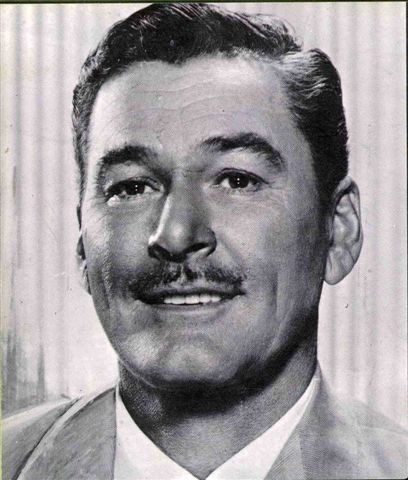
Come in like Errol Flynn!

Papua New Guinea's rich and colorful history is littered with the names of likewise gaudy characters that have carved a niche for themselves.

Few, however, have made more of an impact than the flamboyant and swashbuckling Errol Flynn.

With the discovery of very good paying gold in 1926 at Edie Creek above Wau - six days walk from Salamaua - a gold rush of massive proportions started, not only from Australia but from beyond.

With the major discovery of gold came the last two categories of what the White population of New Guinea was divided into: Missionaries, Moneymakers, and Misfits or Fools, Freaks, and Failures.

Not least among the Misfits was the one who became a Hollywood star - Errol Flynn.

And none, probably, has done more to promote PNG than this lovable rogue who went on to become the world's top sex symbol.

The superb scenery, glorious hills and harbours, white beaches, and shady copra plantations are still today as Flynn describes them in his famous autobiography, My Wicked, Wicked Ways.

Even though Flynn is long dead- through excessive drinking and womanising - he still lives on in PNG.

Places like Salamaua, Wau, Bulolo, Lae, Finschhafen, Port Moresby, Laloki, Rabaul, Kavieng, Madang, and the Sepik River have become famous because of My Wicked, Wicked Ways.

His book remains a bestseller to this day and, in places like Salamaua or Wau - just to name two - people still talk about him.

"Flynn used to drink here,"they'll tell you in Salamaua, or, "this is where he went mining for gold", they'll reminisce in Wau.

Legendary Australian patrol officer, JK McCarthy, recalls in his book, Patrol Into Yesterday, how Flynn stepped in once to protect a small man from a bully: "It was done in the most dramatic style and all of us should have foreseen that he had a movie career ahead of him. There was the noisy bar, the crowd of onlookers, the challenge and the hero knocking the loud-mouthed one cold, right on cue."

Flynn has been called many names: adventurer, thief, lover, liar, murderer, and Hollywood legend.

He probably didn't do much good while he was here, but nevertheless, he placed PNG on the world map as a place where a young man can find himself.

The true-life story of movie superstar Errol Flynn was more dramatic and incredible than even the wildest of his many Hollywood-starring roles.

He may have more swashes then anyone before or since, but Flynn was also a liar and a thief, an incurable seducer of women (and men), a fraudster, hustler, and even murderer... all before the age of 21!

Before the age of 21, Flynn was tried for murder.

He was a thief, a liar, a bad boy in every instance,he was a gigolo, a hustler, and was even accused of being a spy - then he conquered Hollywood.

Wildly promiscuous from an early age, his teenage years were a frantic roller coaster ride of sex, adventure, ill-gotten riches, drink, sex, fighting... and more sex.

Panoramic portrayals of his amazing past have brought the true legend of Flynn explosively to life, blowing the lid off his rabble-rousing time in the gutters of Sydney, and his death-defying escapades searching for gold in the jungles of New Guinea.

Flynn was simply the sexiest, most charismatic star of the Golden Era of Hollywood.

The epitome of a lusty, virile hero, Flynn turned the World into his stage as millions fell for his wicked, wicked ways.

Superstar and legend, Errol Flynn was Hollywood's symbol of male virility during the Golden Era of moviemaking.

He was adored by fans worldwide, admired by millions, despised by many.

Flynn was the quintessence of the swashbuckling hero, but his on-screen exploits were pale echoes of his real life adventures.

Flynn's prowess with women was so infamous that the expression "Come In like Flynn" became a common phrase used to describe the ease with which a man might conquer a woman.

In fact, after a life rocked by success and scandal, Errol Flynn died under dubious circumstances aged 50, supposedly while having sex with a woman.

As an actor, Flynn built the foundation for characters later elaborated by Mel Gibson, Arnold Schwarznegger, Harrison Ford, and Kevin Costner.

He died at age 50 of a heart attack, having had a good run in Hollywood with 53 films - some for Jack Warner, others contracted out to MGM - across from great female players such as Olivia De Haviland, Maureen O'Hara, Bette Davis, Greer Garson and others.

Errol Flynn was born Errol Leslie Thompson Flynn on June 20, 1909 in Hobart, Tasmania, Australia.

His parents were Professor Theodore Thompson Flynn and Lily Mary Young.

Professor Flynn was a well-known marine biologist and zoologist who later went on to receive an MBE for his work at Queens University, Belfast.

Errol also was a direct descendant - on his mothers' side - of Midshipman Young from the infamous HMS Bounty Mutiny of 1789.

The 18-year-old Errol Flynn - with an already shady background - arrived in New Guinea in October 1927 to make his fortune on the newly discovered goldfields at Edie Creek, Wau.

From his arrival he tried unsuccessfully to bluff himself into money as a cadet patrol officer, gold prospector, slave recruiter, dynamiter of fish, trapper of birds, manager of coconut and tobacco plantations, air cargo clerk, copra trader, charter boat captain, pearl diver and diamond smuggler.
He was also a prolific writer and contributed regularly to Australian newspapers and magazines with absorbing tales about the untamed jungles of New Guinea.

Flynn soon discovered that the Australian government had a severe shortage of patrol officers, and he hoped to bluff his way through in Rabaul, but this colonial career was short-lived when his background was discovered.

He moved restlessly from one job to another, acquiring many different skills but no great competence.

Hoping to get rich fast, he lived by his wits and ran up many debts.
In Rabaul, although considered a likeable and capable young man, his reputation for roguery quickly spread and he ceased to be with the Administration.

His best memory of Rabaul was of "a wonderful saloon where you encountered everything the world could yield up - miners, recruiters, con men, thieves, beachcombers, prospectors - cubicles both downstairs and upstairs, several phonographs playing, cards".

Long after Flynn had left he was remembered around Rabaul, mostly for the unpaid bills he left behind.

Even after he became famous as a film star, he never paid any of those bills.

If people wrote asking him to pay, he would send them autographed photographs of himself, saying these were much more than what he owed them.

The story is told of the famous occasion when a film of Flynn's was showing in Rabaul, and at the end of the credits, a dentist to whom Flynn owned a large account jumped up and shouted: "And teeth by Eric Wein."

In 1928, with money from his work on a coconut plantation and a loan from a shipping company in Sydney, Flynn bought a schooner and took an American film company to make a documentary about headhunters on the Sepik River.

He recalls: "The last place in the world I wanted to go was the Sepik River, a human graveyard. I cruised to the north-east coast, where the red, muddy Sepik River flowed into the sea.

"We moved into the broad stream, running against a strong current.

"The Sepik is a monster waterway 600 miles long.

"No white man has been up the river more than 200 or 300 miles and the nature of the river or the land beyond that was practically unknown and remains little known to this very day.

"The waterway was heavily populated with mosquitoes, kanakas, and pukpuks (crocodiles).

"As we traveled the garamuts, tomtoms made of crocodile skins, kept up a steady communication: 'Outsiders, big magic on the water, beware'.

"When we came in close to shore and tried to get film of the natives, we got arrows instead, real ones, and poisoned."

In 1929, Flynn sailed from the offshore islands to Salamaua, to fulfill his original ambition.

He hired eight men, bought marching gear and gold-digging equipment, and set out for the goldfields at Edie Creek.

The tough march from Salamaua to Wau - through a region filled with blackwater fever and poisoned arrows - tested men's limitations.

The rigorous walk between Salamaua and Wau took up to a week, Flynn writing of how the gold fields had to be approached from Salamaua by 10 days'smarch through leech-infested jungle, in constant fear of ambush, and at night wondering 'whether that crawly sound you heard a few feet away might be a snake, a cassowary or maybe only a wild boar razorback.I have seen Central Africa, but it was never anything like the jungle of New Guinea'.

At Edie Creek, temperatures were high during the day and fell steeply at night.

There was an epidemic of dysentery and malaria, with no trained doctors to attend to the sick.

His men left, and Flynn quickly realised that, "I had neither the provisions, nor the money, nor the necessary men to work a claim properly. The competition with other prospectors who were better set up was too much".

He lost everything he owned and was forced to take a job as manager of a tobacco plantation in Laloki, near Port Moresby.

Six months later, Jack Hides, a flamboyant patrol officer and old Papua hand, turned up at Flynn's place and noted in his diary that Flynn was doing a creditable job.

Flynn had criticised the Australian administration in a letter to his father in Tasmania.

Writing to The Bulletin soon after his arrival, he protested against a government policy that affected his own plantation, the high import taxes imposed on tobacco: "Papua is one of the natural homes of the tobacco plant, and, as Papua is part of the Commonwealth and is in receipt of a yearly subsidy of £40,000 from the federal government, the obvious market for its tobacco is Australia. But the market is closed by a prohibitive tariff."

At Laloki, the man who was to become the world's top sex symbol, wrote about his affair with Tuperselai, a beautiful Papuan girl: "We let ourselves be carried down by the current of the stream and, on the shores, in a secluded nook of shade, at last we made love.

"I can only say that I don't know when again my heart pounded so.

"I was less alone and soft-aired Laloki River is one of my most precious, poetic memories."

In January 1933, in the bush near Finschhafen, Morobe District, Flynn began to "blackbird" local labourers.

His diary recorded that enslaving human beings also involved an element of trust - which was frequently betrayed - and described his conversation with a tribal chief who said he "had given me all their young men and I must look after them well. He enjoined me that I must not sell any of them and when their time had finished must bring them back myself".

Flynn later observed that, "If you spend more than five years in New Guinea you were done for, you'd never be able to get out, your energy would be gone, and you'd rot there like an aged palm".

In April 1933, he sold his property and suddenly left the island with some smuggled diamonds and a case of malaria that would plague him for the rest of his life.

During his years in New Guinea, from the age of 18 to 24, Flynn came to maturity and formed his adult personality.

New Guinea brought out the worst and the best in him.

He was willing to try anything, but wouldn't work at anything for very long.
He said, "There is no thrill like making a dishonest buck" and always expected others to support him when he had no money of his own.

He lived by his wits, bluffed his way through crises, and used his fists when he had to.

One of Errol Flynn's greatest loves was writing.

Apart from his autobiography My Wicked, Wicked Ways, he wrote two semi-autobiographical novels Beam Ends and Showdown and in addition wrote articles for the Sydney Bulletin whilst in PNG under the pen-name "Laloki"; for the magazine Photoplay during his first years in Hollywood and his "holiday" in Spain during the Civil War; and then in 1959 he wrote about the Cuban Revolution during which time he was present alongside Fidel Castro.

These writings are compiled in a book called "From a Life of Adventure: The Writings of Errol Flynn" ed. by Tony Thomas.

Errol Flynn loved many women, but he is said to have once confided to a close friend that two of his greatest loves were New Guinea, and writing.

Saturday, December 02, 2006

ADDRESS
BY HON BART PHILEMON, MP
MEMBER FOR LAE
IN REPLY TO 2007 NATIONAL BUDGET
27 NOVEMBER 2006

Mr Speaker,
I commend the 2007 budged handed down by the Treasurer, Hon Sir Rabbie Namaliu.

What a farce it was for this government to create history by adjourning the budget debate for two weeks after it was presented. It is a reflection of a government losing control of managing Members interest.

Mr Speaker, I am pleased to note that the Treasurer continues to adhere to the fiscal framework established in 2002 when formulating the 2007 budget. These fiscal frameworks without question have now contributed greatly to the macro economic stability enjoyed by this government over the last four years, which have provided strong building blocks for 2007 budget and should continue to do so for any future budget.

If we added up all the billions of kina we have spent through each budget over the last 30 years, it is not hard to see that we have not got value for money spent. There are some leaders in this government that could argue that we have made some positive development since independence. That may be true but if we start to add up all the positive and all the negatives I am sure you will agree with me that the negatives at this stage of our development completely outweigh the positive gains.

Papua New Guinea is richly endowed. We have harvested the fruits of these non-renewable endowments. But we have not so far used the proceeds from these rich endowments to lay down strong building blocks for the sustainable future development for our children and our grand children. The 2007 budget will go down exactly the same track as all past budgets.

The Somare government is making exactly the same mistake that all past governments have made. It is throwing huge amount of money, willy nilly, into National Planning Departments and is mistakenly hoping, that money alone, will salvage our entire development problems. This, of course will not happen, as is the sad case, over the last 30 years. All the billions in this budget as was in all previous budgets will be squandered, leaving behind no tangible building blocks for the future development of our country but a huge liability behind for our children and grand children to carry on.

The Somare Government boast about having a Medium Term Development Strategy as a road map for the public investment programmes. It is a sad indictment of an incompetent government to see that this Medium Term Development Strategy after 5 years is still not completed. The Medium Term Development Strategy in its present form is only a wish list. It still remains, this government’s political rhetoric and political rhetoric it shall remain until such time when the Medium Term Development Strategy priority ranking sectors are fully costed with clear bench marks established for monthly, quarterly, half yearly and yearly monitoring and reviews to ensure that resources are diverted to the right areas and that the resultant outcome is achieved for each of the years within the medium term planned period.

Mr Speaker, this is exactly what Finance & Treasury, under one Ministry have established right at the beginning of the term of this government in 2002. The medium term fiscal strategy and the medium term debt management strategy were developed within weeks soon after this government came into office. The result of this foresight over the last four years is unquestionable.

Mr Speaker, establishing these two medium term fiscal frameworks, has now become the corner stone of the highly successful macro economic stability, this country has ever enjoyed.

The medium term fiscal strategy ensures that the government spending was both affordable and sustainable. It also provides that both expenditure and revenues are managed annually within the 5 year medium term strategy to ensure that the government continually achieves its planned (deficit / surplus outcomes) fiscal outcome. The Medium Term Debt Management Strategy provided that over five years planned period the government lives within its means by ensuring that the debt to GDP ratio of the high unsustainable level of 72% is reduced to a more sustainable level as has now been achieved.

Mr Speaker, when this government took office on 5 August 2002, it had no choice, but to take drastic action and strong economic leadership to break the vicious cycle of reckless unproductive spending of previous successive governments and put in measures, to ensure that the government lives within its means, if we are to save Papua New Guinea from becoming the so called “Failed State”.

However, Mr Speaker, achieving and maintaining macro economic stability on its own, even over extended period of time, is likely to fail, if it is not backed up by strong, effective, micro economic development implementation reforms.

Mr Speaker, this is exactly the dilemma that the Somare Government is facing. It is entering into its twilight period, of its history making existence, as the first government in Papua New Guinea to serve its full term of five years in Parliament, yet it has squandered this golden opportunity of the political stability to really create firm building blocks or develop a spring board of long term sustainable micro economic development implementation reforms to propel Papua New Guinea into a prosperous future.

Mr Speaker, political stability, single handedly underpins social / economic stability and provides strong foundation for future prosperity of a nation. However without visionary leaders, as is the case with the Somare Government, blind leading blind, this opportunity is lost.

Mr Speaker, when this government took office in 2002 every sector within the economic or social areas was in extremely dire need of some degree of resuscitation. All these sectors were symbolically in intensive care unit. All hands were required on deck, so to speak, to bring all sectors out of intensive care unit and slowly nurse them back to health so that each can perform as normal and fully contribute to economic growth.

Mr Speaker, this means that each social and economic sectors within the Medium Term Development Strategy priority ranking or not must develop its own Medium Term Development Strategy, each are costed with clear well established bench marks so that monthly, quarterly, half yearly and yearly monitoring and reviews can be made to ensure that planned targets are achieved. This should provide the yardstick through which performance can be measured and that the resultant values can be determined if our limited resources are well spent.

Mr Speaker, this is exactly the process within which Medium Term Fiscal Strategy & Medium Term Debt Management Strategy operates to give this government the successful macro economic fiscal outcome, over the last few years.

However, sad to say, after four years, and now going into its fifth year this government has miserably failed to develop sectoral packages that specifically and clearly links macro and micro economic sectors. Until this happens, (time will not permit) the Medium Term Development Strategy, the government blue print, for public investment programmes, is just another political rhetoric which will provide no sustainable development benefits for the future development of our children and our grandchildren.

To date, the Somare government is riding high on the crest of one and the only one single wave and that is the wave created by the fiscal reforms, over the last four years. The government could have been riding on the crest of many other waves but that’s not to be as we are now approaching the end of the term of this government. The only wave that the Somare government is creating is the “tsunami” type wave, which destroys everything in its path.

The Planning & Monitoring Department lacks capacity. It is long over due for capacity boosting. On top of that it needs stability at the political level. In four years it had seven political heads (one every six moths). On top of this again, the department cannot be expected to achieve any degree of sustainable result, in its implementation, if it does not have the benefit of the sectoral road map, which maps out clearly on annual basis planned targets.

Mr Speaker, my concern is mainly our children and our grand children’s future. How do we achieve a prosperous future for them if we still have not learnt the lessons from our chequered past, in which billions of kina has been spent, and yet there is nothing much on the ground to show for the billions that has been spent except the huge liability left as a legacy for our future children.

The government must commit itself now to do nothing less than to ensure that proper development plans are in place so that every toea spend not will directly contribute to a brighter future for our children. That it spends K1.00 and that kina produces K2.00 tangible sustainable value for the future. At the moment the government is spending K1.00 but will not achieve any sustainable tangible values.

Mr Speaker, What I am saying is not just playing politics with the Somare government. I am not trying to talk down this government because I was sacked as Minister for Finance & Treasury by this Prime Minister. I have already been on record to express the same concern when I was a Minister in this government. I have rated the government’s performance whilst I was still a Minister, giving it a rating of four out of ten in its performance.

May I remind this Parliament, that recently during the life of this government that UNDP has re-classified Papua New Guinea’s development progress from the second lowest development category of “developing country” to that of the lowest category of “least developed country”. This is an indictment of the lack of the development achievement over the last 14 years in support of the argument I am making.

Mr Speaker, it is always difficult to build confidence in a country with a chequered history like Papua New Guinea. It is so easy to lose confidence. There are already signs of waning confidence with multi million kina contracts being delayed. It is discouraging to see the growing risk of un-prioritised, non-costed, unplanned free spending ahead of 2007 elections.

Given the challenging development needs, the windfall gains should have been spent strictly in the context of highest priority areas such as infrastructure, education, health and law and order. But there needs to be prioritised, properly costed and monitored spending based on clearly established bench-marks and planned oriented outcomes.

The government has completely failed to come up with its policy on state owned commercial entities such as PNG Power, Telikom, Air Niugini etc. It is continuing with 100% state ownership. Once again the government is not learning the lessons of the past. There will always be political interference one way or another. These State Owned Enterprises are seen as the milking cows for political party support; the employment potential as a return favour for political cronies and hence complete disregard to follow the proper appointment process of Fit and Proper persons test for the Board and Management appointments. How can we ever get out of this political quagmire to stop continually pumping good money after bad money into propping up non performing state owned commercial entities? There is no protection from political interference so the millions of kina that these entities are spending to re-capitalise as well as the millions of kina that the state is pumping into these entities will only end up leaving the entities worse off than if the government had pursued a policy of partial privatisation.

Instead of spending the money to resuscitate badly performing state owned commercial entities the government would have been better off using the balance of the windfall to reduce future liabilities, especially debt. Reducing these future liabilities has the best intergenerational impact. It ensures future source of sustainable revenue flows and it reduces the burden for our future children.

Mr Speaker, while there has been some improvements in spending controls and monitoring, there is still much room to improve. I am greatly concerned about the breaking of the link between Treasury and Finance budgets and the Development budget. This clearly, lessens controls, in a system not working well. We should all be concerned especially ahead of the 2007 elections given Papua New Guinea’s past record in this aspect.

Mr Speaker, there are still major difficulties in executing projects, which are delayed, and poorly designed. It is not a big secret, simply capacity is not there.

Mr Speaker, from the knowledge, with the department of national planning, the implementation of the development programmes is moving at a snail pace. That is with the exception of the K1.9m, and I say this with tongue and cheek, already released to Bogia electorate, from the K8.9m allocated under the District Education Improvement Programmes, in the last supplementary budget.
What about the rest of the 88 districts?

What about the K44.5m for District Transport Infrastructure Programme?

What about the K20m for Community Roads Improvement Programme?

What about the K22m Roads and Bridges Programme?

What about the K22m District Treasury Roll-out Programme?

This list goes on and on!

With a month to go before the Financial books are closed, the Finance and Planning Minister, Mr John Hickey, is still not in a position to inform this House on how the funds are expended.

The Minister continues to tell this House that compliance and acquittal process is paramount before funds are released. I totally agree with him on this, however, he fails to understand that district funds are transferred directly to the district treasuries and thereby, when ever there is disbursement, he should have accessibility to the records.

Now we have another two supplementary budgets of K650m for 2006 and K450m for 2007.

If the implementation of the August Supplementary Budget of K682m is any indication, then Mr Speaker, I ask what guarantee is there that the 2007 Development Budget will be executed accordingly with the fiscal frameworks.

Mr Speaker, this government will not admit it, but I firmly believe that it needs a major effort to improve capacity to go hand in hand with new increased spending, to meet urgent important needs. The government needs to understand a fine balance between spending to meet important development needs, and avoid wastage of finite resources this country has.

Mr Speaker, the type of spending and how this government spends is absolutely important, particularly with this government, as in previous successive governments, where execution, monitoring and reporting remains weak, or in the case of this government, remains non-existence.

Mr Speaker, I have already alluded to the fact that this government must take the Medium Term Development Strategy a step further, and fully prioritise and cost sectoral plans over the medium term. This would guide the government, when it decides, how it uses any new windfalls. This will ensure that we use our finite resources to our best advantage. For this government, it is already too late. It has squandered its golden opportunities, and the election is now just around the corner.

Mr Speaker, if the future governments continue to ignore this, then we will continue to fall into the same pitfalls that the past governments have fallen into.

Mr Speaker, the Somare government had the advantage of having the pre-August 2002 period of economic crisis to learn from, and made sure that it manages spending so as to avoid repeating the same mistake as before. This government must understand that much higher spending in the economy that cannot handle it means one thing, and that thing is higher inflationary pressure. If the government is going to spend more, then it needs a more productive economy than we have at present to avoid inflationary pressure.

Mr Speaker, to avoid the foregoing, we must implement more reforms. In recent time the Morauta government has done more reforms in 2 yrs then the Somare government has done in 5 years and it calls for a more open private sector then what exists today.
Mr Speaker, in this respect, I am greatly disappointed that this government has failed to take up front in 2002, the Public Sector reform, in particular, the Right Sizing Programme. This is an important reform area, where this government could have started a process which would have re-allocated significantly from the K1.3billion, unproductive, personal emolument expenditure, to more priority areas.

Mr Speaker, once again, I commend the Treasurer for continuing to apply to the 2007 budget, the medium term fiscal frameworks put in place in 2002.

On the overall macro situation, indications are things continue to go well on the whole.

On the positive side, inflation remains low; exchange rate remains stable; reserves remain healthy; and employment is slowly picking up. The initial calculations on International Monetary Fund across country comparable basis, shows 4 percent surplus in 2005; and 2 percent in 2006.

Mr Speaker, on the negative side, our still high level of debts, and high liquidity levels, could translate easily into inflation, if the government is not careful.

On the growth side, while moderate, is still not high enough to make meaningful difference to the standard of living for the bulk of Papua New Guineans. This is in some ways, reflects the complete failure and incompetence of the Somare government to make full use of its term in government, to develop sectoral strategies to prioritised, and monitor spending based on the established bench-marks, and planned outcomes.

Mr Speaker, there is an increasing and alarming gap developing between other low-income countries and Papua New Guinea. These countries are actually making gains, while we, Papua New Guinea, continue to stagnate in a quagmire.

Sub-Saharan Africa, with much less natural endowment is growing twice as fast as Papua New Guinea, in the face of its reforms.

Other low income countries are following suit through their reforms, growing and moving further ahead of our beloved country, which is more richly endowed. Relative to these countries, Papua New Guinea is slipping further behind, like the proverbial tortoise.

Mr Speaker, Papua New Guinea is a member of the International Community. Within the globalization economic and liberalised free trade concept, we are more and more answerable to the International forums for our action and / or non-action. Domestically we are answerable to our own people. And as the saying goes, Mr Speaker, you can’t talk until you first clean up your own back yard.

Mr Speaker, our backyard has been clearly spelt out in the Millennium Development Goals progress report for Papua New Guinea, 2004. This report covers the areas of (i) Poverty (ii) Primary Education (iii) Gender Equality (iv) Infant and Child Mortality (v) Maternal Health (vi) HIV/AIDS, Malaria and other disease (vii) Environmental Sustainability (viii) Global Partnership for Development.

These are issues of the national development agenda established through our alignment with the incomplete Medium Term Development Strategy. These are the issues, common to every country on the face of this earth, based on fundamental values of freedom, equality, solidarity, tolerance, health, respect for nature and shared responsibility.

Mr Speaker, I leave these issues with today’s leaders and tomorrow’s leaders who may be interested in our children and grand children’s future with this reminder.

After 31 years of wondering in the wilderness, we still have not yet found the land of milk and honey. We have travelled through stormy weather, high waves and arrived at many cross roads. The immediate question we need to seriously ask ourselves is Which Way Papua New Guinea? Which cross Road?

Thank you and God Bless Papua New Guinea.

Friday, December 01, 2006

PNG arts and craft go online

Papua New Guinea is participating in an international online exposition in Chinese Taipei (Taiwan) to promote its arts and crafts.

The "APEC Local Culture Virtual Exposition (ALCIVE)" opened in August 2006 and closes in July 2007.

It features all 21 APEC member economies with potential visitors to theexposition being consumers from throughout the world.

The invitation to PNG to participate was through the Small Business Development Corporation, as part of the recent small and medium Enterprises (SME) working group meeting in Chinese Taipei.

The SBDC spearheaded PNG's participation at the online exposition, with the country having its own "Exhibition Hall" at this exposition via the Internet.

The website address is www.alcive.tw , from where one can enter PNG's "Exhibition Hall".

Since the launching, more than 75,000 visitors from throughout the world have visited the site.

The SBDC has been supported by network partners such as the Tourism Promotion Authority, the National Museum & Art Gallery, the National Cultural Commission, Tourism Industry Association, and Tour Operators' Association.

Local cultural industries exist in most APEC member economies, and are also industries that are deemed mostly needy of relevant government assistance.

Though the products of the local cultural industries, which are often embedded with rich local culture and art, have been an attractive element to foreign buyers, but, considering that most producers in the local cultural industries are micro-enterprises, most have encountered difficulties in selling their products successfully in the overseas market.

In 2006, APEC Chinese Taipei thus initiated a project, which includes the APEC Local Cultural Industry Market Development Forum and the APEC Local Cultural Industry Virtual Exposition.

The objectives of the initiative are as follows:

* Enhancing the capacity of SMEs and micro-enterprises in the local cultural industries in order that their markets can be expanded;
* Building a platform for local cultural industries in demonstration of their products to all APEC economies in order that business opportunities in the international markets can be increased; and
* Strengthening cross-border cooperation in the APEC region in promotion of the development of overseas markets for the local cultural industry and in seeking the best practices of market development.

"This is a very good opportunity and potential for PNG, particularly its artsand crafts, to be promoted globally and secure overseas markets," says SBDCManaging Director Mr Brian Komun.

He added that the exposition would also be an ideal place for the country to promote itself as a tourism destination to the world.

APEC's Director General of SME enterprise administration, Mr Sun-Quae Lai,noted PNG's unique arts and crafts which would be showcasedto the world at the exposition.

"As we know," he says, "the products in local cultural industries are an expressionof local culture and art, which are attractive to foreign buyers and therefore have high potential to export.

"Nevertheless, most producers in local cultural industries are micro-enterprisesand have difficulties to sell their products overseas.

"The purpose of the exposition is thus to create a platform for displaying theproducts of APEC member economies' local cultural industries, thereby helpingthese industries to develop new business opportunities in overseas markets.

"We know that Papua New Guinea has a myriad of excellent local cultural goodsthat can be showcased to the world.

"Participating APEC member economies each have their own online"Exhibition Hall" at the online exposition.

Participating member economies are able to use photographs, pictures, text, animation, video footage and others to showcase their economy's local cultural products within their "Exhibition Hall".

The exposition will provide transaction opportunities for all participating products.

Each product showcased in the exposition displays contact details, so that consumers can purchase the product.

However, the exposition will not provide a direct on-line purchasing service.

Consumers wishing to purchase a product will need to contact the exhibitionthemselves using the contact details provided on the exposition website.

During the exposition, the exposition organizers will place advertisementson leading portal sites and other major international websites, and will organise promotional activities to ensure that as many people as possible visit the exposition.
Surf's up in PNG

SURFING in PNG is entering an exciting period next year as the sport celebrates 20 years in the country.

Apart from the gala celebrations, the national titles – which will be used to select the national team for the Pacific Games in Samoa – will be staged at Lido Beach in Vanimo, West Sepik province, next January.

Coinciding with the 20th anniversary and the national titles will be the launch of an innovative three-year strategic plan for the Surfing Association of PNG, which was drawn up by a World Bank consultant.

This plan – which will serve as a roadmap for implementing strategies and achieving goals – is indeed a landmark for sport in PNG.

TheWorld Bank came into the picture after noticing the internationally- unique “bottoms up” approach developed by founder Andrew Abel.

“The national titles will be held at Lido village in Vanimo from Jan 10 to 15,” PNGSA president Abel said.

“We estimate between 100 and 200 surfers competing in all divisions.

“We will have junior boys and girls, open men and women, and ‘lapun’ senior masters division for those over 35.

“The national titles and selection will consist of members, men and women of all six affiliated clubs: Sunset, Vanimo (Sandaun province); Sero, Taurama (NCD); Kavieng (New Ireland province); and Dolf (East Sepik province).“There’ll be short and long board.

“We’ll be expecting anywhere between four feet to eight feet-plus waves.

“Following the titles will be the selection on an elite PNG surfing team, which will be made up of one open woman short board, one open man short board, and one open man long board.

“The team, plus management and coach, will be sent to the Surfing Australia High Performance Training Centre on the Gold Coast.

“The reason for this is to expose our elite surfers to the rigours and demands of physically and mentally preparing for high-performance competition surfing under the guidance and training of Glen Elliot, head surfing judge, and Sasha Stocker, head surfing coach of Surfing Australia.

“It is further planned to have our elite surfers billeted by Australian surfing families and to compete on the weekend surfing circuit, and work part-time in established surfboard manufacturing factories to learn the art of shaping and glassing a surfboard, and how the shape and measurements of a board affect the performance of a surfboard in the water.

“The surfers will then return to PNG and then do another one-month round of training prior to departing for Samoa in August.”

The whole event will be covered by a surf documentary filmmaker Adam Pesce, who was here in 2003 to document the history and evolution of modern surfing in PNG.

“It is the plan of the Surfing Association and Pesce and his film crew, to also document the young elite surfers during the national titles through to their training in Australia, to Samoa Pacific Games, and back again to their respective home towns,” Abel said.

“The documentary will be the culmination of 20 years of promoting and developing surfing as a sport; and surf tourism as a growing niche tourism industry with our young elite surfers as ambassadors of PNG.”

PNG found the perfect wave in 1987 when young Abel, third-generation of the famous Abel dynasty of Kwato Island, set up a club in Vanimo with an enthusiastic bunch of novices.

From those humble ripples, the PNG Surfing Association is now a growing wave.

“The surfing association was essentially set up by a bunch of young surfers, primarily local surfers, 20 years ago,” Abel recalled.

“We became affiliated to the PNG Sports Federation as a sporting body and then the International Surfing Association, which is based out of California, United States.”

From those humble beginnings, with an office situated out of the late Sir Cecil Abel’s residence at Waigani, the fledgling PNG Surfing Association worked to promote surfing – first and foremost – at the grassroots level.

“Our pioneering surf club was the Vanimo Surf Club, based out of West Sepik province, in Lido village, in 1988,” Abel said.

“From those humble beginnings in Vanimo, I spent a lot of time flying to and fro with my girlfriend at that time, Francesca, who is now my wife.

“She is instrumental with me in sitting down with the young Vanimo surfers to introduce surfing.

“At that time, they were only surfing with bellyboards, and through their enthusiasm, I started to donate my own boards and then the senior surfers started to pick up the sport, started surfing the real fibreglass boards.”

Abel approached the village councillors as well as John Tekwie, at that time Sandaun governor, who later became the patron of the association.

“Basically, my approach is unique in the surfing world, and it’s been confirmed by people who come into the country,” Abel added.

“The approach was based on what I called the ‘bottom up’ approach, whereby the surfing association works in collaboration with the respective village communities and we set up an affiliated surf club, in this case being Vanimo Surf Club.

“Vanimo Surf Club are owned and operated by the local surfing community.”

"They are affiliated to the Surfing Association.

"The Surfing Association are affiliated to organisations like PNG Sports Federation, which have everything to do with sports; now more so with the PNG Tourism Industry Association, which is to do with tourism; and the International Surfing Association.

“And through this ‘bottom up’ approach, the local village community can access tourism through our affiliations with our surf tour operators in Japan and Australia – which are our primary markets – and our close working ties with Air Niugini and the Tourism Promotion Authority.

“And this is the unique thing about this ‘bottom up’ approach where Surfing Association are working within our constitutional framework, which is also listed in our goals and objectives posted on our website www.surfingpapuanewguinea.org.pg.”

To cut a long story short, such has been the interest in the way PNG Surfing Association are going about that a student at Plymouth University, England, recently did his PhD thesis on sustainable surf tourism in PNG.

Surfing in PNG have indeed found that elusive ‘perfect wave’ that all surfers dream about.For more information about surfing in PNG, log on to www.surfingpapuanewguinea.org.pg .